Drones are huge. And, while there are lots of restrictions around them, many travelers take them on the road because they produce amazing sweeping aerial shots.
One standout option is the Antigravity A1. Released in late 2025, it attempts to render the traditional gimbal obsolete for a vast segment of creators. By leveraging a dual-lens 360-degree capture system, the A1 records everything in every direction simultaneously. The result is a “fly now, frame later” experience that feels less like piloting a drone and more like directing a virtual camera in a pre-recorded digital environment.
Two Lenses = No Blind Spots
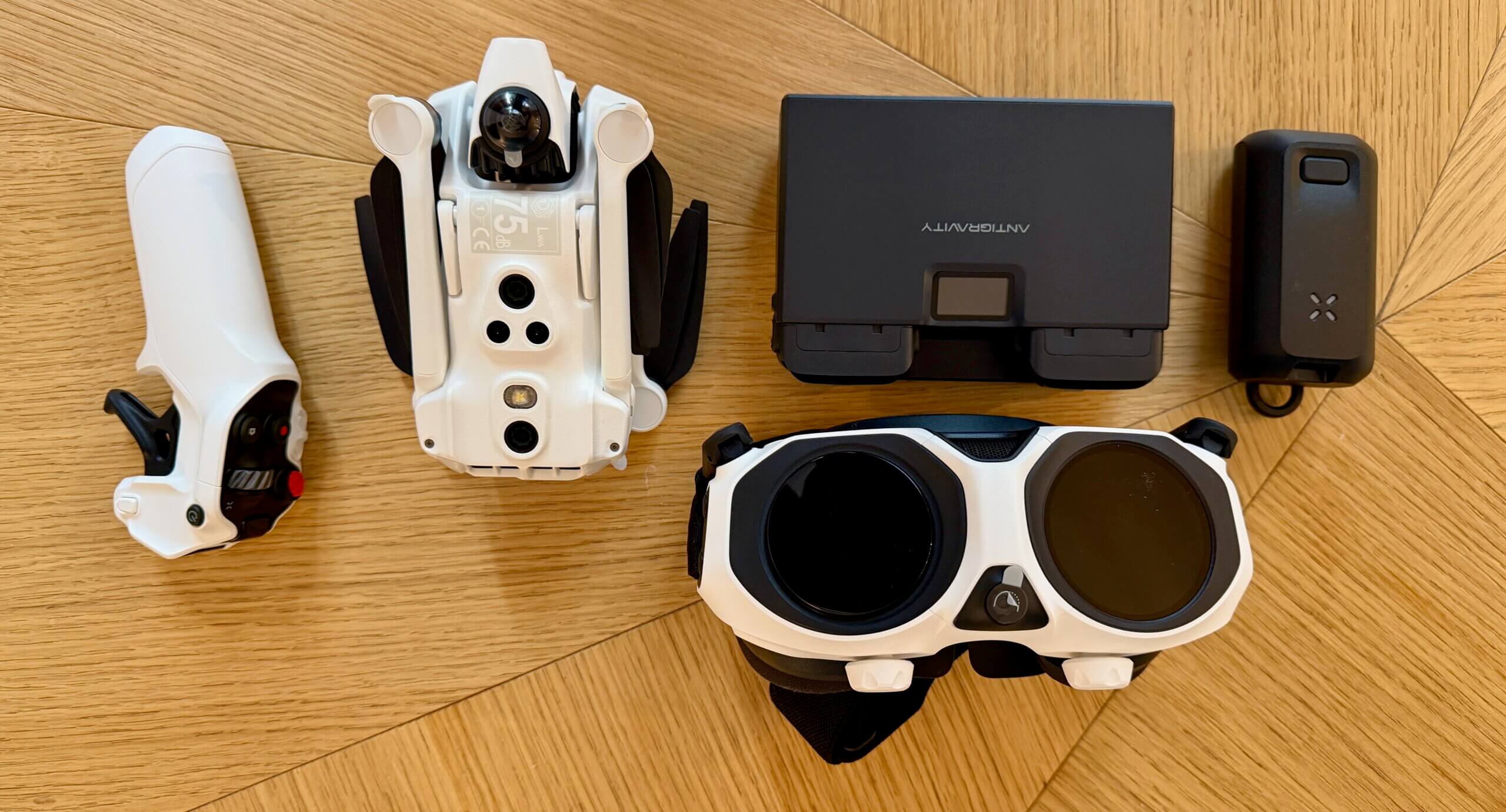
What makes the Antigravity 360 A1 special is its two lenses. Most drones feature a single lens that points forward. The A1, however, features two ultra-wide-angle lenses positioned on the top and bottom of the central fuselage, each capturing a 200-degree field of view. When those images are combined, they overlap to create a seamless 360-degree sphere.
In the final exported footage, the drone itself is digitally removed, creating the illusion of a camera floating in mid-air with no visible means of support.
The sensors are 1/1.28-inch CMOS units. While smaller than the 1-inch sensors found on some “Pro” level photography drones, they are large compared to typical 360 action cameras. This allows for significantly better low-light performance and a higher dynamic range, capturing details in highlights and shadows that would typically be lost in the harsh contrast of midday sun.
Most countries require drones weighing 250 grams or more to be registered and subject to stricter flight rules. Antigravity clearly understood the importance of this threshold — the A1 weighs exactly 249 grams with its standard battery, meaning it is not considered a commercial drone and does not require registration.
The drone also feels remarkably sturdy. It uses a high-grade carbon-fiber-reinforced polymer that offers a better strength-to-weight ratio than the standard ABS plastic found in cheaper models. The folding mechanism clicks into place with a precision that suggests long-term durability. When folded, the drone is roughly the size of a large smartphone, though about three times as thick.
The Flight Experience
The Vision Goggles: These are sleek, lightweight, and feature dual 4K micro-OLED displays with a 120Hz refresh rate. Latency is nearly non-existent and they include integrated head tracking. Because the drone records in 360 degrees, you are not limited to seeing what is in front of the drone. When you turn your head to the left, the goggle feed pans left. Look down and you see the ground passing beneath you. This provides a sense of presence and spatial awareness that is simply impossible with a traditional fixed-camera drone.
The drone uses a single-handed motion controller. You point the controller where you want to go and pull the trigger to accelerate. Tilt your wrist left to bank, or raise the nose of the controller to climb. It is an incredibly intuitive system that allows even a novice to fly through complex environments within minutes. For professional FPV pilots who prefer manual acrobatic flight, the A1 does support a traditional “Mode 2” stick controller, but the motion controls are so fluid that most users will likely never switch back.
Here’s a video of the drone in action:
Camera Performance
The marketing for the Antigravity 360 A1 proudly displays “8K Resolution.” In a traditional camera, 8K means every pixel is packed into a 16:9 rectangle. In 360 video, those pixels are spread across a full sphere. When you reframe that 8K sphere into a standard flat video, you are looking at a crop of the total image.
The color science is noticeably improved over previous 360 cameras. The A1 features a “Vivid” profile for those who want punchy, social-media-ready colors, and a 10-bit “Log” profile for professional editors who need to match footage to other cameras in a color-grading suite. The stabilization, powered by Antigravity’s “FlowState” algorithms, is nothing short of remarkable — you can fly in 20mph winds and the footage remains as steady as if the camera were on a tripod.
The Editing App
The “Antigravity Studio” app allows you to download footage wirelessly at speeds up to 80MB/s and reframe your video using your phone’s gyroscope. You simply watch the video and move your phone around to “film” the scene in real time. The app also features “Auto-Frame,” an AI tool that identifies subjects and automatically generates a cut that keeps them in focus. For a solo creator, this effectively provides a virtual camera operator that never misses a shot.
Battery Life
Battery technology remains the bottleneck for all small drones. The A1’s standard Intelligent Flight Battery provides a theoretical 24 minutes of flight. In real-world conditions with moderate wind and constant recording, expect closer to 19 or 20 minutes.
While 20 minutes sounds short, the “work per minute” is much higher than with a traditional drone. Because you don’t need to re-fly a path to get different angles, a single 20-minute flight can yield the same amount of usable footage as three flights with a Mavic. For those who need more time, the “Pro Battery” — which pushes the weight over 250g — offers 39 minutes of flight time, though it does compromise agility slightly.
In terms of flight dynamics, the A1 is a “cinewhoop” style flyer: stable and predictable rather than aggressive and twitchy. It has a top speed of roughly 36 mph, which is plenty for following bikes or cars, but it won’t keep up with a professional racing drone. The “Turtle Mode” is a life-saver — if you crash and end up upside down, the drone can flip itself over using its propellers, allowing you to take off again without having to retrieve the aircraft on foot.
Who Is This For?
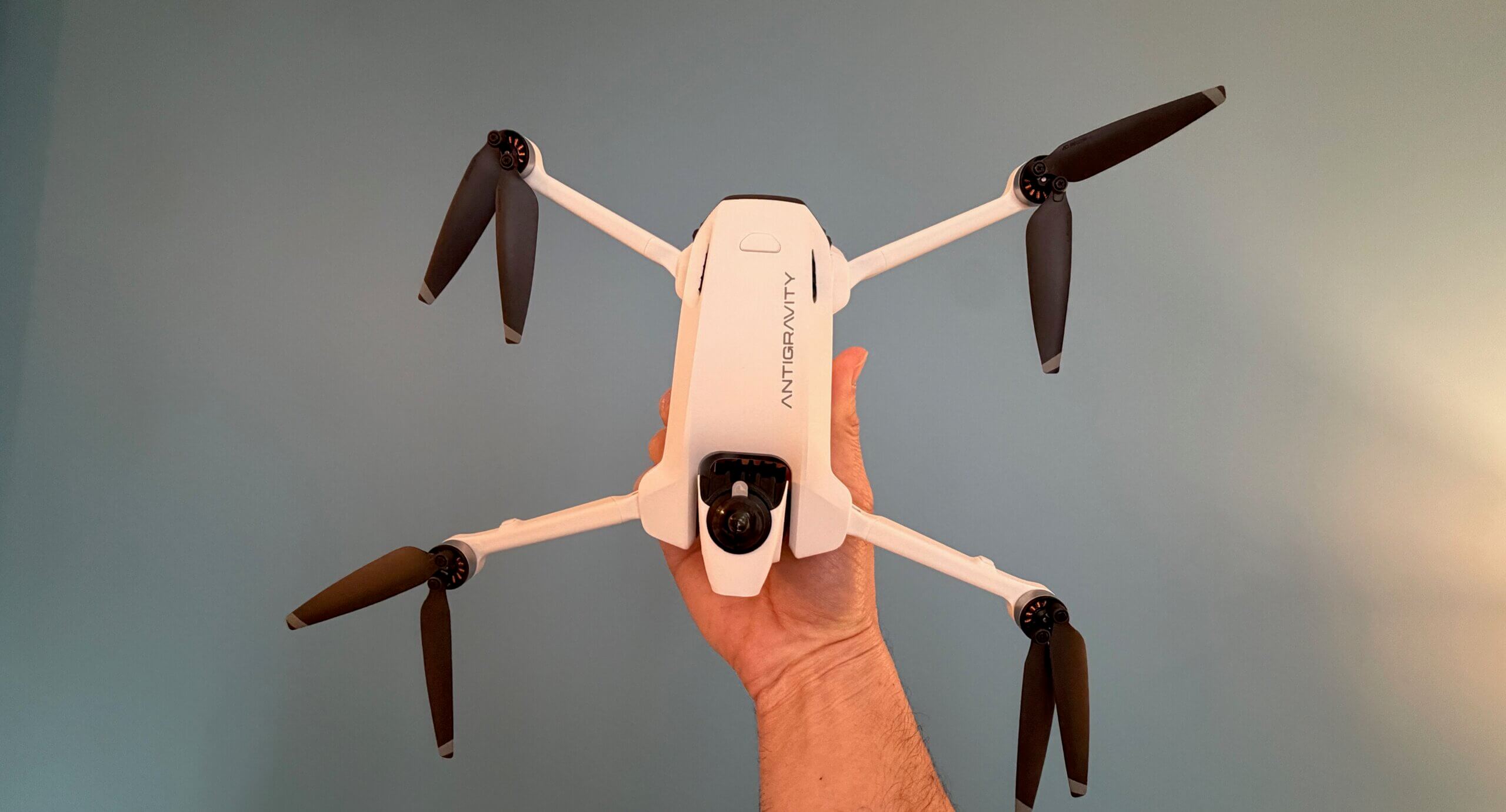
The Antigravity 360 A1 is a niche product that is rapidly becoming mainstream.
- Extreme Sports Athletes: For skiers, mountain bikers, and surfers, the A1 is a game-changer. Set it to “ActiveTrack” and go. Because it shoots in 360, it will never lose you, even if you go under the drone or take a sharp turn.
- Real Estate Videographers: The A1 is well-suited for interior tours. It can fly through a house and, in post-production, you can look at the architecture, floors, and ceilings in one seamless take.
- Travel Vloggers: The portability and “invisible drone” effect make it an excellent travel companion for those who want high-production-value shots without a full crew.
The Antigravity 360 A1 is the most exciting drone I have tested. By removing the need for a gimbal and the stress of manual framing, it allows the pilot to focus on the one thing that truly matters: the story they are trying to tell. While the image quality isn’t quite at the level of a high-end cinema drone and the lenses are admittedly delicate, these are small prices to pay for the creative freedom the A1 provides. If you are a creator who is tired of the same old drone shots and wants to push the boundaries of what is possible in the air, the Antigravity 360 A1 is worth serious consideration.