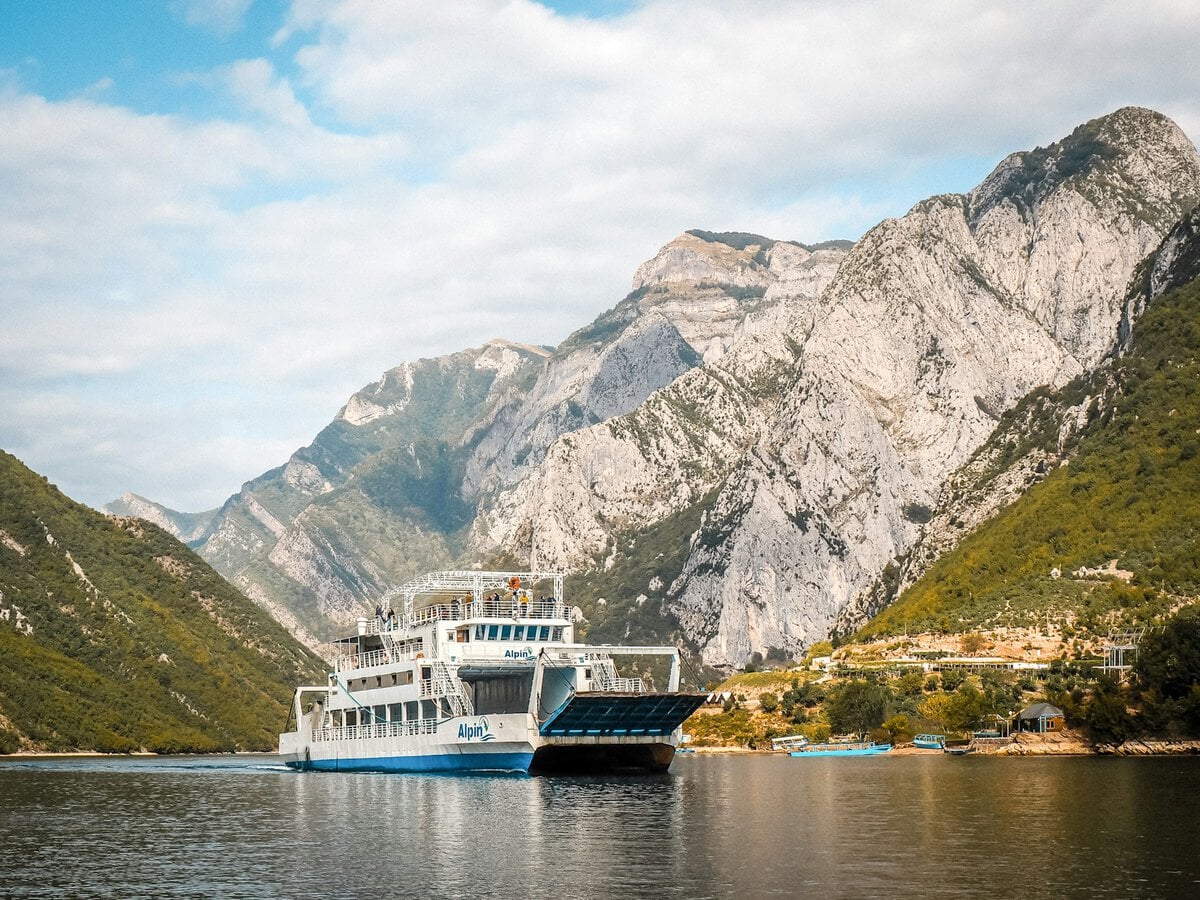
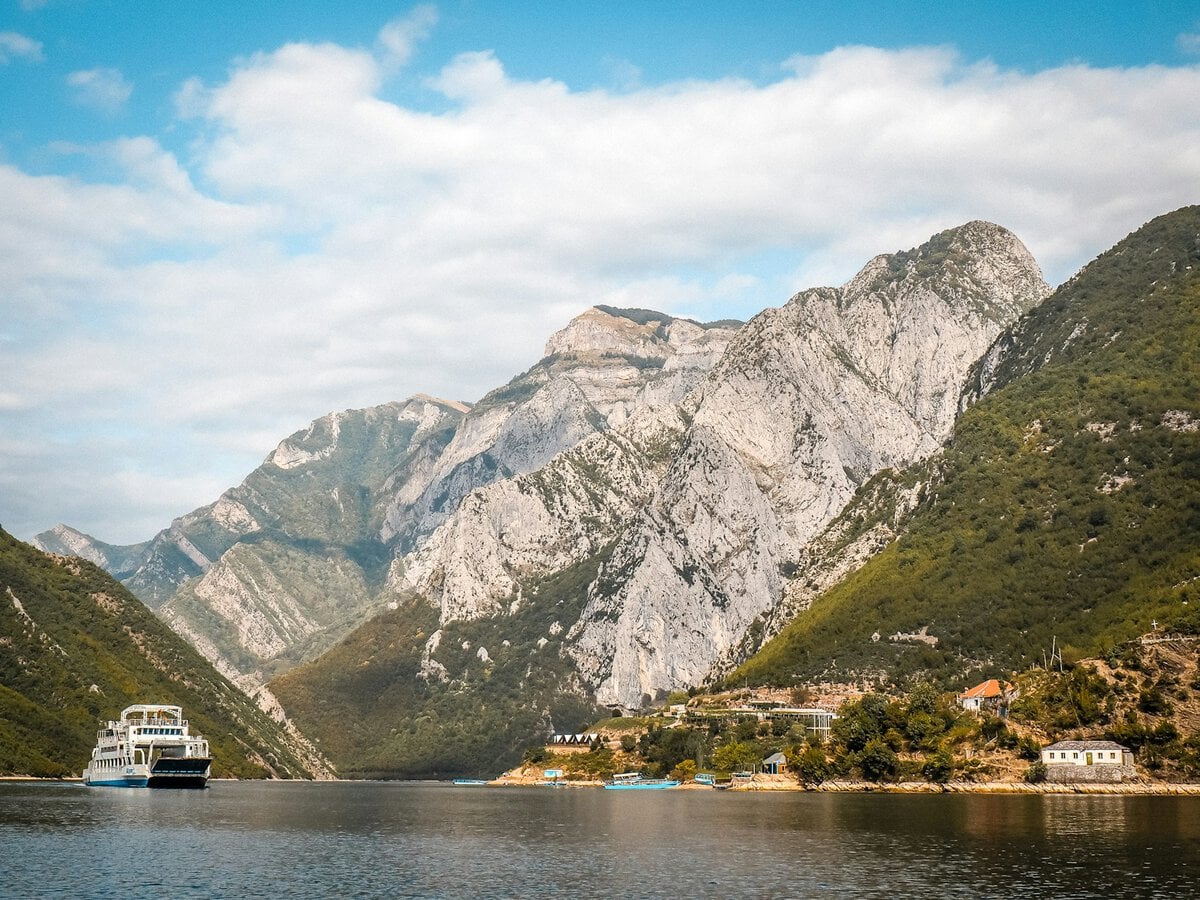
The Lake Koman ferry runs through 57 kilometers of flooded mountain valley, and most passengers spend the entire three-hour crossing at the rail. There are no commentary announcements. The boat cuts through water so green it looks lit from below, between cliffs that drop straight into the lake.
From here, a three-day route connects the valley of Valbona to the stone village of Theth — through terrain that few travelers outside Albania have found yet. Here’s our guide to three days in the Albanian Alps hiking from the lake to the pass.
The Lake Koman Ferry: Europe’s Most Dramatic Boat Journey
The journey north from Tirana takes about three hours by road, arriving at the harbor before the ferry departs in the morning. The boat itself is modest — a working vessel that carries locals, supplies, and travelers in roughly equal measure. That mix sets the tone for what follows.
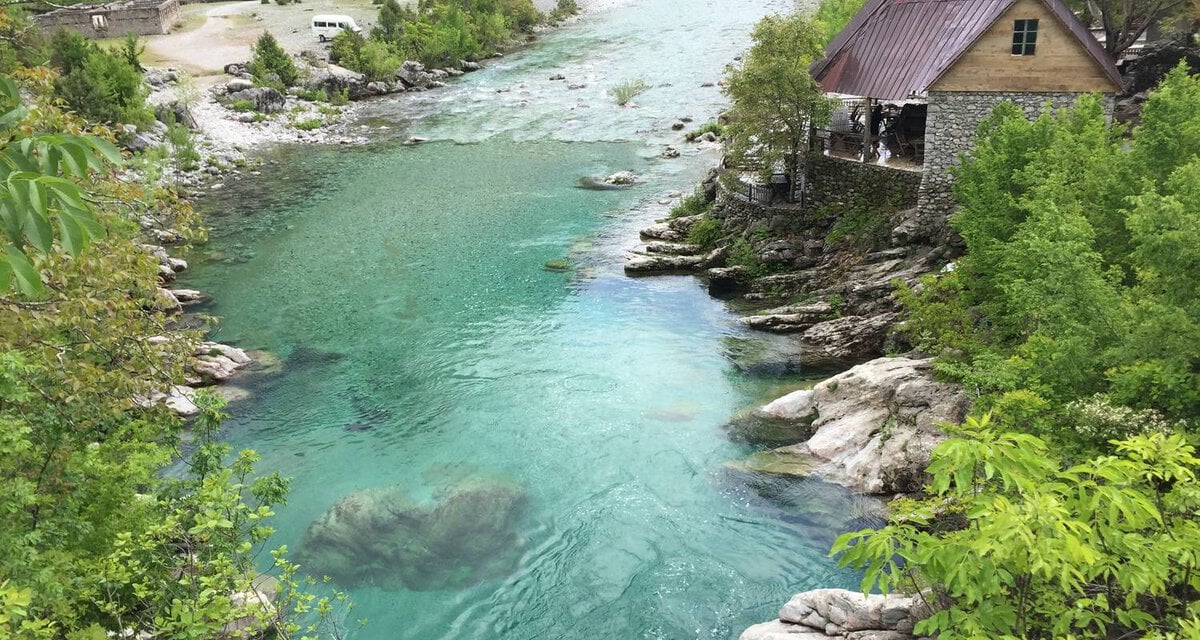
As the lake narrows into canyon-like passages, the water shifts from deep green to pale turquoise depending on depth and light. Dense forest covers the slopes to the waterline. Small homesteads appear occasionally on shelves of land above the water, accessible only by boat. There are no roads along the shore.
Travelers regularly comment that it is one of the few places in Europe where they have put their phones away entirely — not as a decision, but simply because nothing felt worth reducing to a screen.
Valbona Valley: Where Traditions Come Alive
From Fierza at the far end of the lake, the route continues by road to Valbona Valley. Accommodation here is in family-run guesthouses — homes where the same families have been receiving travelers for two and three generations. Rooms are simple and clean; meals are prepared in the house kitchen and served at a shared table.
Dinner on the first evening typically includes homemade bread, local white cheese, mountain honey, and a slow-cooked meat dish. The principle of mikpritja është ligj — roughly, “hospitality is law” — is not a cultural performance here. Hosts offer raki and extra portions because the custom runs deeper than the tourist trade.
One guesthouse patriarch describes growing up in Valbona during the Communist era, when the valley was completely cut off from the outside world each winter. The stories he shares over dinner give travelers a context for the landscape that no guidebook provides.
Albanian Alps Hiking From Valbona to Theth
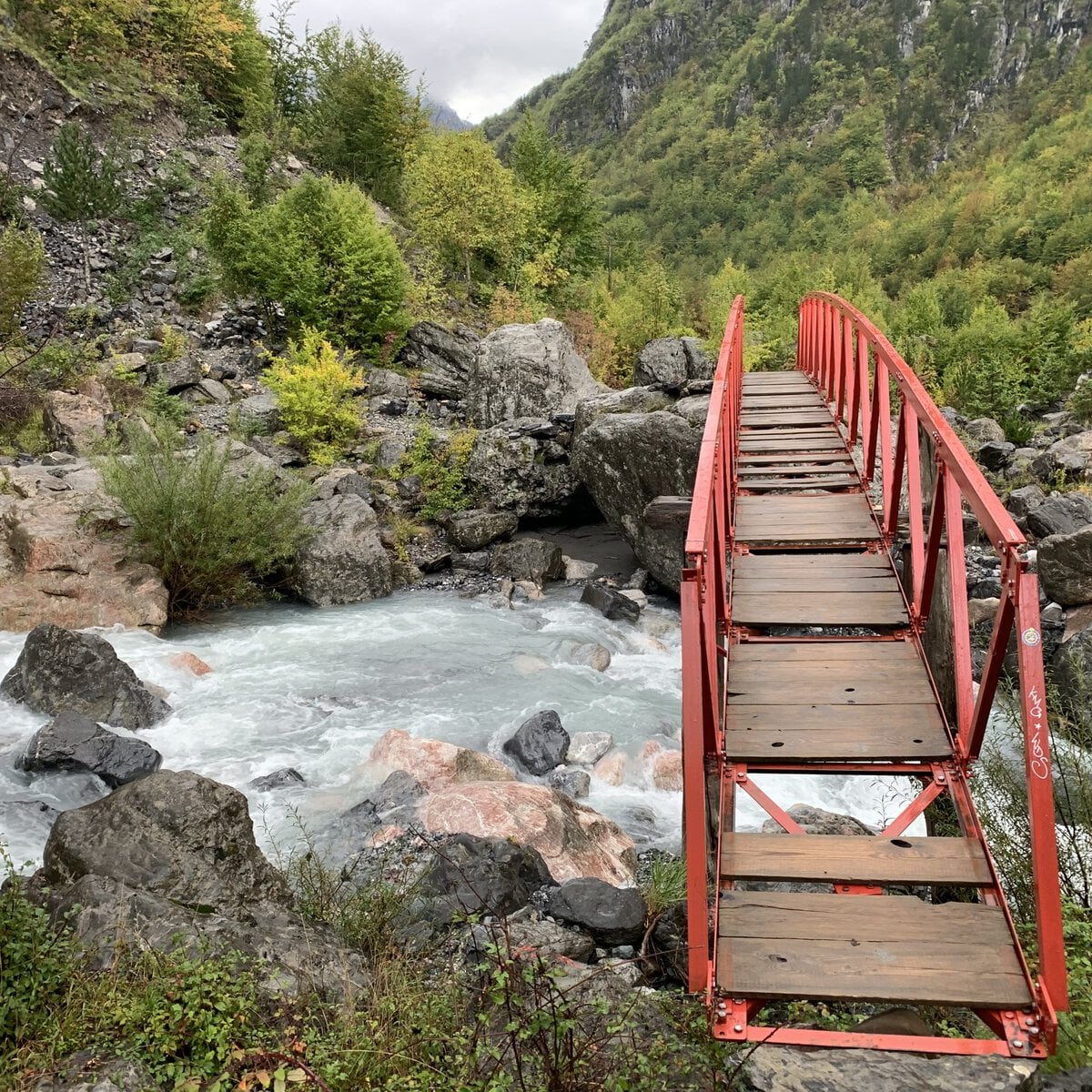
The hike from Valbona to Theth covers approximately 14 kilometers through terrain that showcases everything remarkable about the Albanian Alps. Starting early, when mountain air is crisp and trails are quiet except for occasional greetings from local shepherds, the route passes through dense forests where sunlight filters through pine branches and the scent of wild herbs grows stronger with elevation.
There are no crowds, no commercial facilities — just ancient paths connecting mountain communities. As the trail climbs higher, the forest opens to mountain meadows dotted with wildflowers and traditional stone shelters. The terrain becomes rockier, requiring more careful footing, but the physical challenge is immediately rewarded with expanding views of surrounding peaks.
The most powerful moment comes at the trail’s highest point, approximately 1,800 meters above sea level. After several hours of steady climbing, the mountains suddenly open in every direction. Standing there, surrounded by endless peaks stretching to the horizon, many hikers become completely silent. Travelers have described taking out cameras only to put them away again, choosing instead to simply sit and absorb the vastness.
Theth National Park: Living History in Stone
The descent into Theth National Park reveals one of Albania’s most remarkable villages. Traditional stone houses with slate roofs scatter across the valley floor, some dating back centuries and still occupied by families whose ancestors built them. The architecture tells the story of mountain life — thick stone walls for winter warmth, strategic positioning for protection, and craftsmanship that has withstood generations of harsh weather.
Visits include Theth’s iconic stone church, a symbol of the village’s resilience, and the Lock-in Tower (kulla), a traditional refuge structure that represents the complex social codes that once governed mountain communities. These aren’t museum pieces — they’re living elements of a culture that continues in modified forms today.
The crystal-clear Grunas Waterfall provides a fitting end to the day’s exploration. Fed by mountain springs, the water maintains its clarity year-round, creating pools that reflect surrounding peaks with mirror-like precision. The sound of cascading water mingles with mountain silence in an atmosphere hikers consistently describe as profoundly peaceful.
Evening in Theth follows similar patterns to Valbona — shared meals, local stories, and genuine hospitality that transforms travelers into temporary family members. Guesthouse owners in Theth often share their own perspectives on mountain life, having experienced the transition from complete isolation to gradual connection with the outside world.
Beyond the Landscapes: Cultural Immersion That Matters
What distinguishes an Albanian Alps hiking experience from other mountain destinations in the Balkans is the depth of cultural access it offers. The combination of the Lake Koman ferry, the Valbona valley guesthouses, the high-mountain crossing, and the stone village of Theth delivers not just scenery but a living encounter with one of Europe’s least-changed mountain cultures — one that rewards travelers willing to trade comfort and crowds for something genuinely rare.