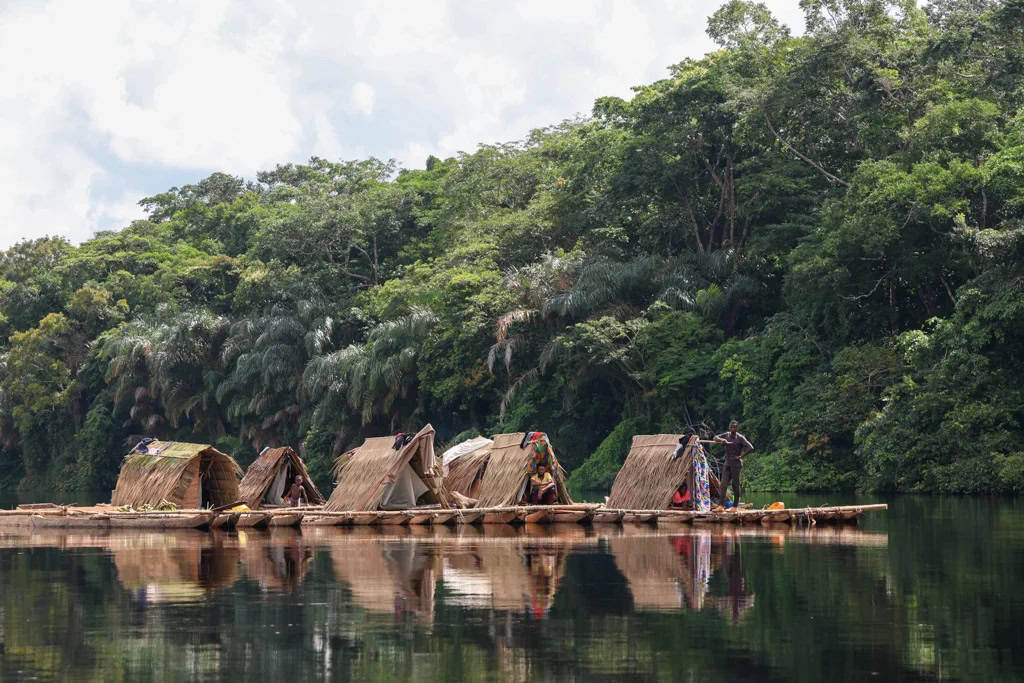
Standing at the edge of a Congo River expedition in Kinshasa, watching wooden pirogues disappear into what looks more like an inland ocean than a river, most travelers have no idea what they’re about to witness. The Congo is the world’s deepest river, the second-largest by discharge volume, and the spine of a rainforest that stretches almost without interruption to the horizon.
As a river operator who has guided expeditions here for years, I’ve watched the same realization cross people’s faces somewhere around the second day on the water: this is not what they expected, and it is significantly more.
Six Days of River, Forest, and Wildlife Outside Kinshasa
A private multi-day safari combining Congo River expeditions, Zongo and Vampa Falls, and guided wildlife drives through Nsele Valley Park and Bombo-Lumene Reserve.
- Private boat expedition on the Congo River with island exploration
- Guided wildlife safari: zebras, buffalo, ostriches, and birds across two reserves
- Zongo and Vampa Falls with overnight at Zongo Safari Eco-Lodges
- Kisantu Botanical Garden and cultural visits in Kinshasa
- Private 4×4 transport, English/French-speaking guide, and park entrance fees included
- Suitable for ages 8 and up; easy to moderate physical difficulty
Understanding the Scale of the Congo Basin
What the numbers mean before you get on the water
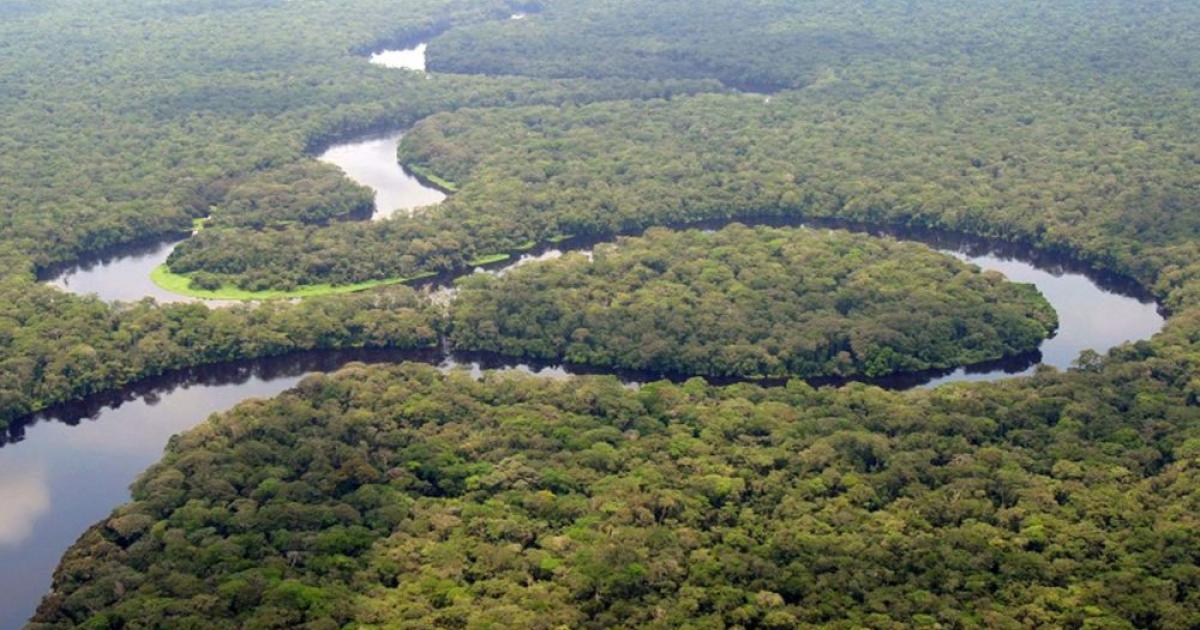
The Congo River runs over 220 meters deep in places. It moves more water to the Atlantic Ocean than any river except the Amazon. The rainforest lining its banks is the second-largest on Earth. These are facts most travelers have read before they arrive in Kinshasa. They don’t fully land until day two on the water.
What changes by the second day
As the boat leaves Kinshasa and the city fades behind you, the river spreads so wide that the far bank disappears. Unbroken forest extends in every direction, broken only by the river’s channels and the occasional village set back between walls of green. By the second morning, the scale stops being a concept and becomes something closer to a physical condition. There is forest to the horizon, water beneath you running deeper than most buildings are tall, and no obvious end to either.
Life Along the River’s Edge
The floating markets
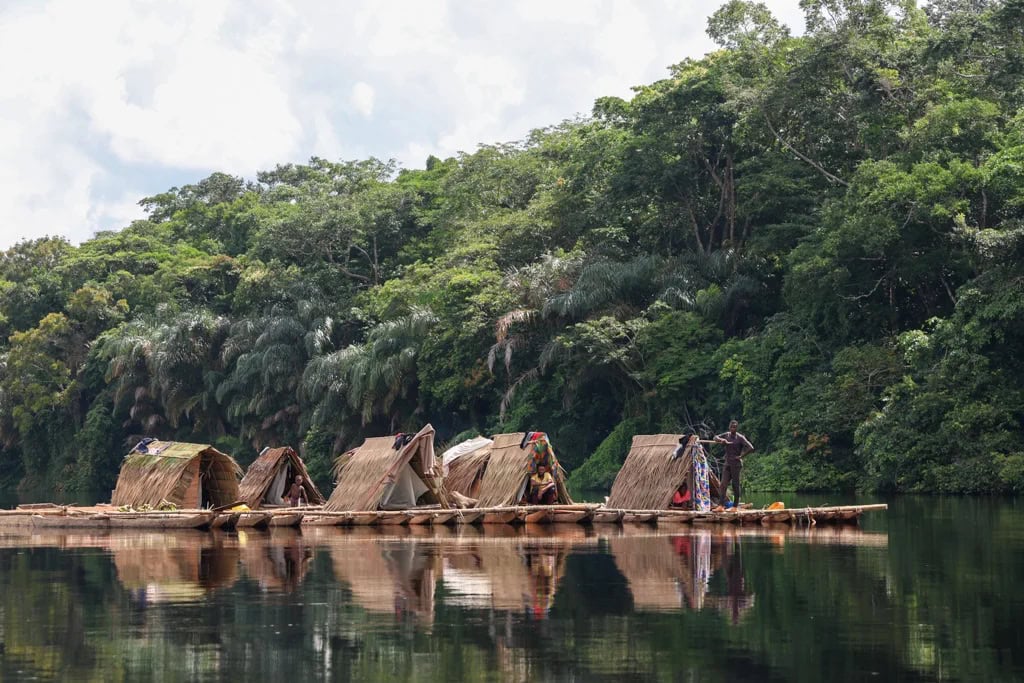
Floating markets appear at river bends without warning. Traders sell fresh fish and tropical fruits from boats lashed together mid-water, conducting commerce on the surface of a river moving millions of cubic meters per second. Children call out from riverside villages as you pass. Fishermen prepare nets and shout to one another across wide channels.
How the river connects rather than divides
A river captain who has spent decades on these waterways describes the Congo not as a river people live near, but as one they live on. The Lingala phrase captures it precisely: Ebale ya Congo ezali lopango te, kasi ezali nzela — “The Congo River is not a border; it is a pathway.” For the communities along its banks, the water connects fishing villages to river ports, remote communities to the wider country, and generations of families to each other in ways that roads in this region rarely can.
Wildlife Encounters in the Heart of Africa
What you’ll see from the water
Wildlife appears without announcement. A quiet stretch of river fills suddenly with birds rising from the canopy. Kingfishers move fast and low across the surface. African grey parrots cross overhead. Monkeys track through riverside trees, often close enough to observe without binoculars. The Congo Basin supports species found nowhere else on Earth: forest elephants, bonobos, okapi. Most require dedicated forest excursions to encounter at close range, but even from the river, biodiversity signals itself constantly through sound and movement.
Dawn and dusk on the water
Both are worth staying on deck for. Mornings bring mist sitting on the water while the forest starts its loudest hour, birds building from a few calls to something that fills the air entirely. Evenings bring large flocks lifting from the treeline in the last light, the sky above the river briefly occupied by hundreds of birds moving together. Neither moment is reliably repeatable, which is part of what makes them register.
Navigating Rapids and Waterfalls
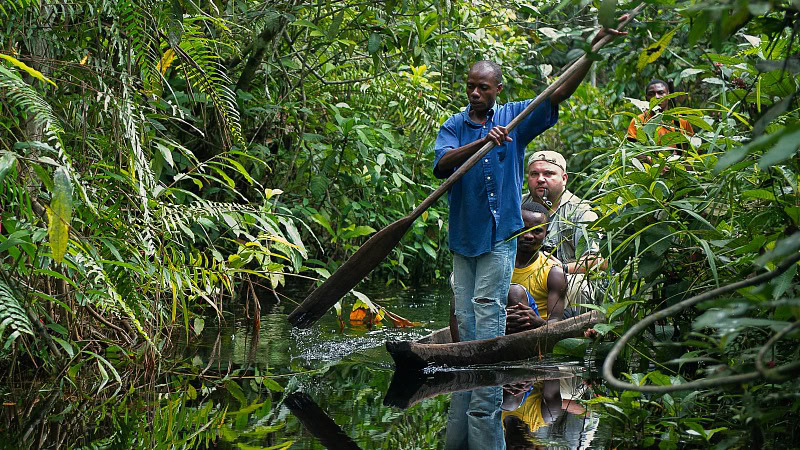
Near Boyoma Falls and the Wagenia fishing sites, the river’s force becomes physical. These are stretches where the water moves differently, where the sound changes, and where local fishermen demonstrate techniques that have been refined over generations to work with currents that would overwhelm any approach not built around deep familiarity with the river. Watching those methods up close is one of the more instructive experiences the expedition offers — a reminder that the Congo has been navigated and understood by its people long before any outside expedition arrived to document it.