Armenia is the kind of country where a first-century temple, a medieval monastery and a Soviet-era staircase can belong to the same day without feeling forced. The country is compact. Its history sits in layers dense enough that a week feels much longer than seven days.
Churches founded seventeen centuries ago still hold services. Lavash still comes out of a clay oven sunk into the floor. In a cave in Vayots Dzor, archaeologists uncovered a winemaking site from around 4100 BC, and the valley around it is producing wine again after decades of interruption. Hospitality reads as a social instinct here long before it reads as a tourism slogan.
That mixture of deep history and ordinary daily life is what stays with first-time visitors.
Christianity Arrived Early, and It Still Shapes the Landscape
Stand in an Armenian church during a service and the sound reaches you before the language does. Deep, unaccompanied voices moving through stone.
Armenia was the first state to adopt Christianity as its official religion. The traditional date is 301, under King Trdat III, who converted after Gregory the Illuminator was released from thirteen years in a pit and, by tradition, cured him. Historians still debate the exact year, and many argue for around 314. Either date puts Armenia roughly eighty years ahead of Rome, which made Christianity its state religion under Theodosius I in 380.
The spiritual center is Etchmiadzin, about twenty kilometers west of Yerevan. Its cathedral is widely described as the oldest cathedral in the world. It closed for restoration in 2018, and after work that reinforced the structure and conserved around 620 square meters of frescoes, it was reconsecrated in September 2024. It is open to visitors again, which matters for planning, because guides spent six years routing people around it. The nearby churches of Hripsime, Gayane and Shoghakat, together with the ruins of Zvartnots, complete one of Armenia’s richest concentrations of early Christian architecture, all inscribed by UNESCO in 2000.
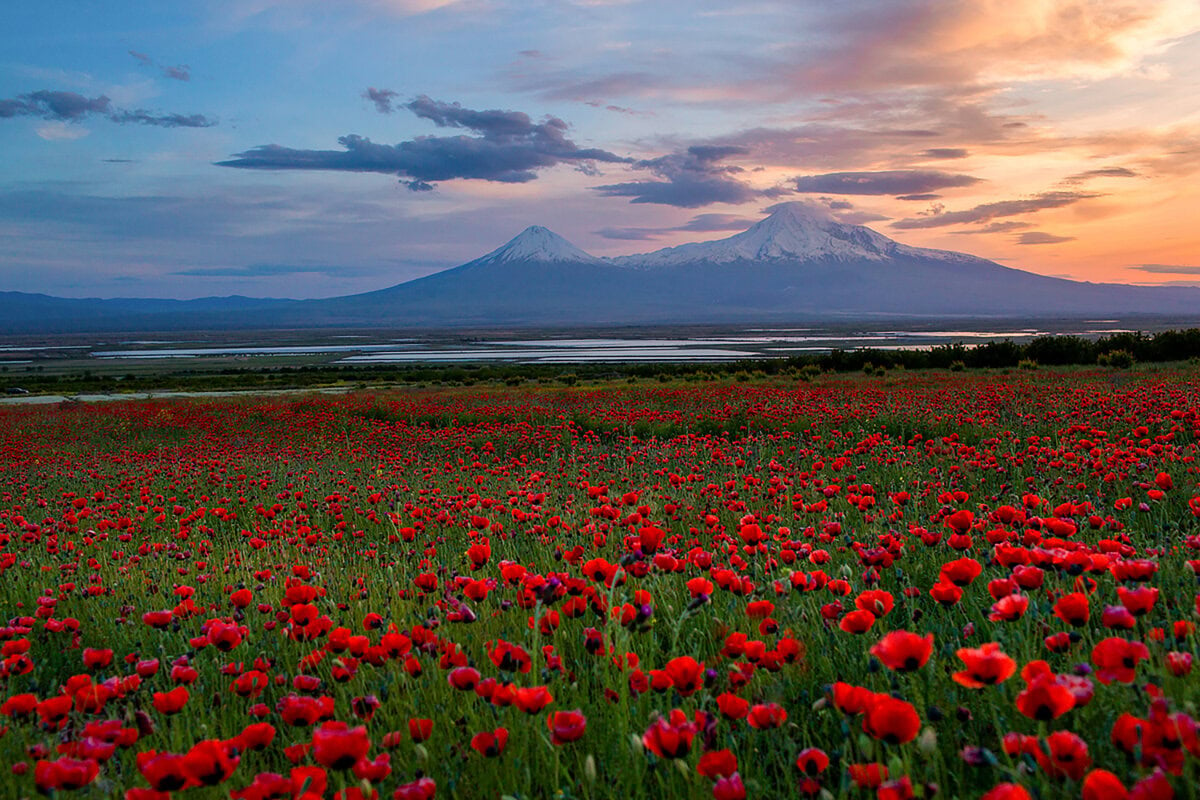
Khor Virap tells the same story from a more dramatic setting. The monastery stands on the Ararat plain about forty kilometers south of Yerevan, and beneath it is the pit traditionally associated with Gregory’s imprisonment. Visitors climb down a narrow metal ladder into the chamber, then come back up to the view the country is known for. Mount Ararat rises 5,137 meters directly beyond the monastery walls, just across a closed border in Turkey. On a clear morning it looks close enough to touch.
Geghard and Garni, Two Worlds in One Valley
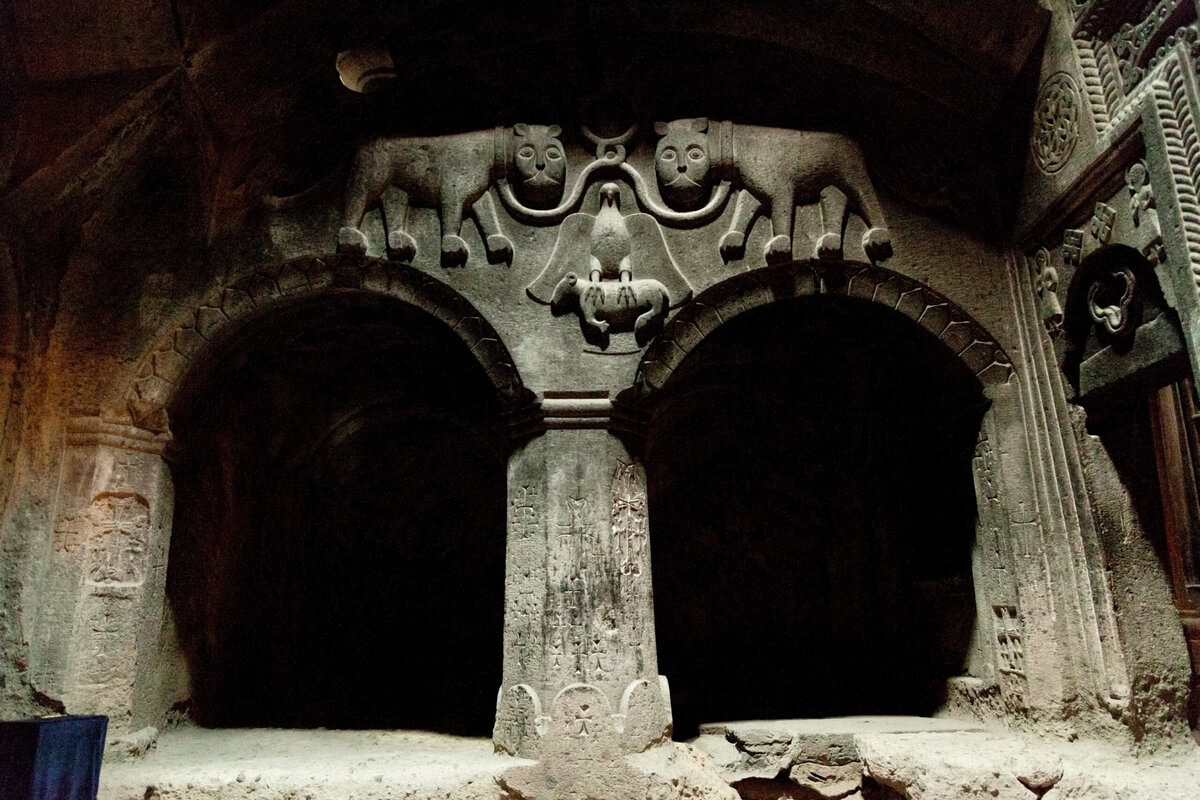
Geghard is partly carved into rock, and the rock changes how the place feels. Voices carry through the chambers, light enters in narrow shafts, and the architecture moves gradually from built stone into mountain.
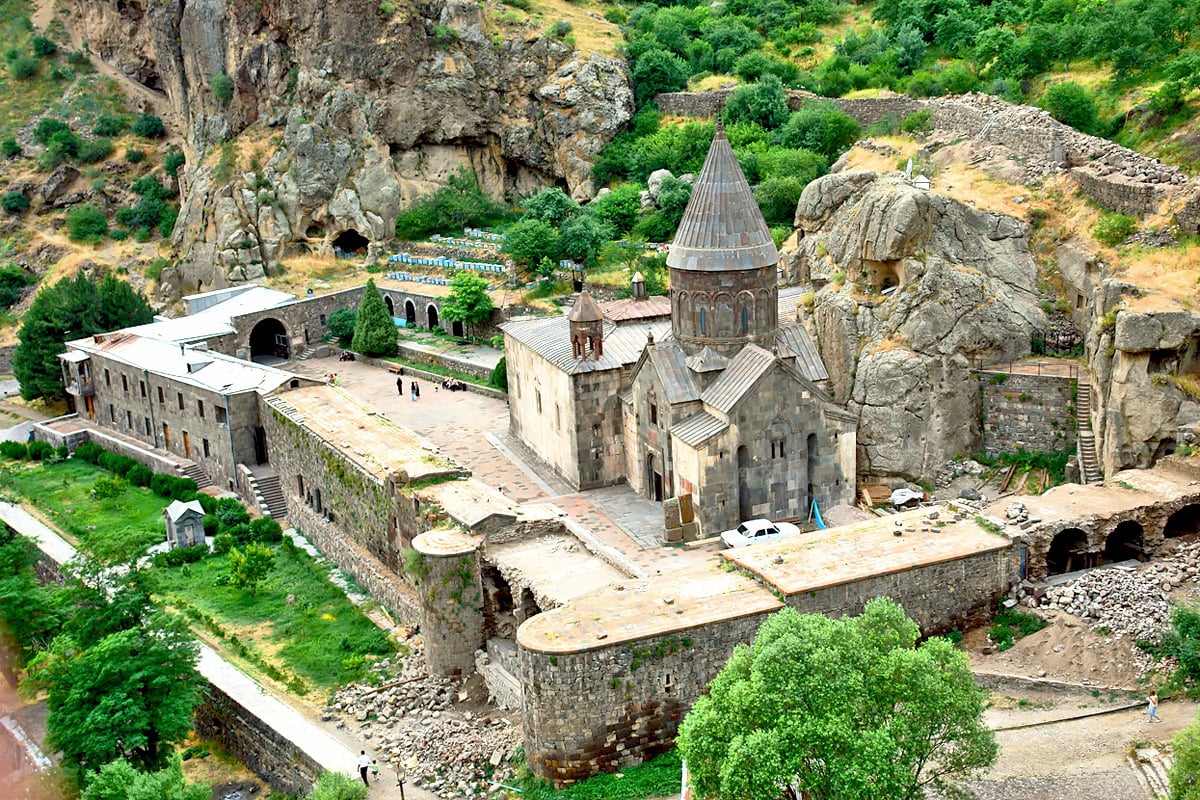
The monastery lies east of Yerevan at the entrance to the Azat Valley, about forty minutes by road. Its origins trace to the fourth century and a monastery founded at a sacred spring inside a cave. The main chapel dates to 1215. UNESCO inscribed Geghard in 2000, describing the rock-cut churches and tombs as “the very peak of Armenian medieval architecture.”
Entry is free. Arrive between nine and ten in the morning and you will have long stretches of the interior to yourself. By late morning the buses come up from Yerevan in a steady sequence, and the carved chambers, which are small, fill quickly.
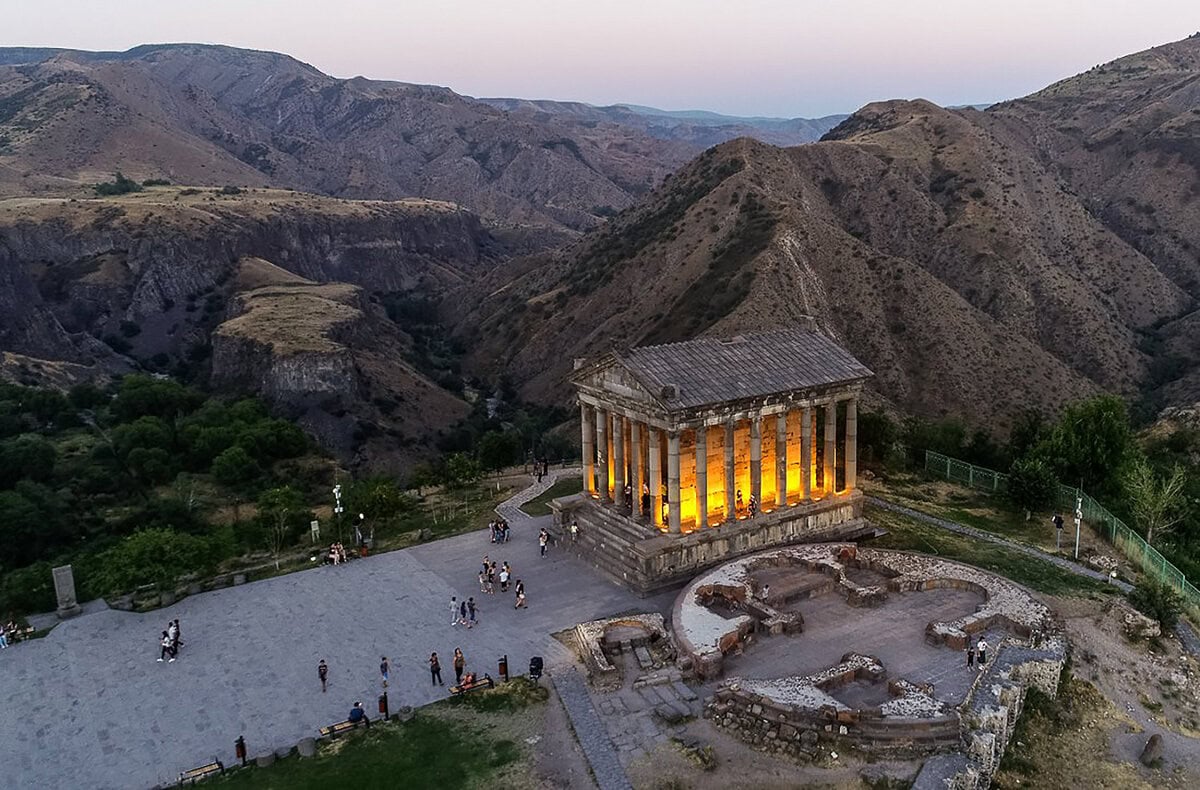
A short drive away, Garni belongs to a different chapter entirely. The colonnaded temple dates to the first century, twenty-four Ionic columns cut from basalt, traditionally associated with the sun god Mihr. It survived Armenia’s conversion while other pagan sanctuaries disappeared, most likely because it had become a royal summer residence. An earthquake brought it down in 1679, and archaeologists rebuilt it between 1969 and 1976 using many of the original stones, so you can still pick out which blocks are ancient and which are replacements. Entry is 1,500 dram, around four US dollars.
Below Garni, the gorge narrows around the Symphony of Stones, a wall of hexagonal basalt columns hanging above the riverbed in long vertical formations. Add a lavash-baking session in a nearby village and a single day moves from pagan Armenia through medieval Christianity into a living food tradition, without ever feeling like a checklist.
Yerevan Changes Color Through the Day
Yerevan earns more than its role as a base for day trips. Much of the center is built in volcanic tuff, and the stone shifts from pale rose in the morning to apricot and warm honey in the last light. The nickname Pink City makes sense after one evening walk.
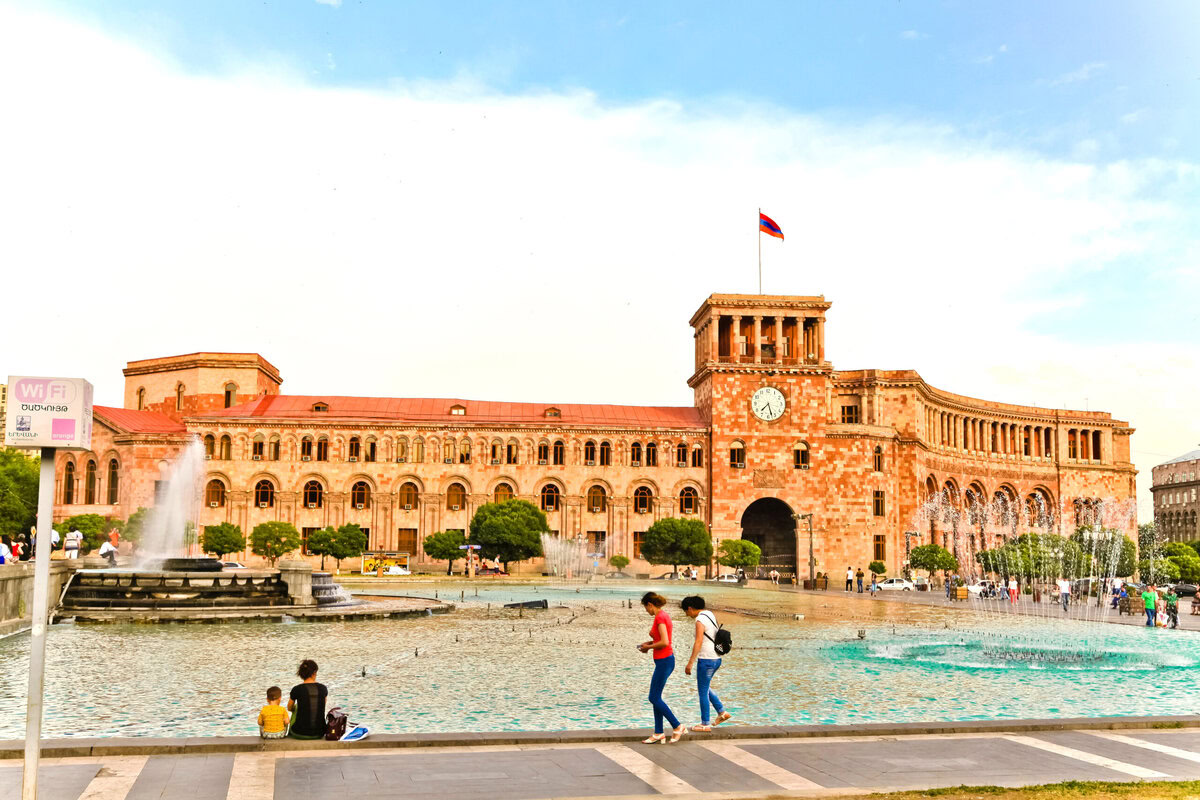
Republic Square is the formal heart of the center, framed by monumental buildings and animated by fountains on summer evenings. From there the city opens easily on foot. Cafés, wine bars, small courtyards, museums, and long streets where the pace feels more Mediterranean than post-Soviet.
North of the center, the Cascade climbs the hillside as a staircase of 572 steps rising about 302 meters across five terraces, with escalators running inside if the climb does not appeal. The outdoor sculpture garden and the Cafesjian Center for the Arts turn the structure into one of Yerevan’s most unusual public spaces, blending Soviet-era ambition with contemporary art in a setting that rewards an unhurried afternoon.