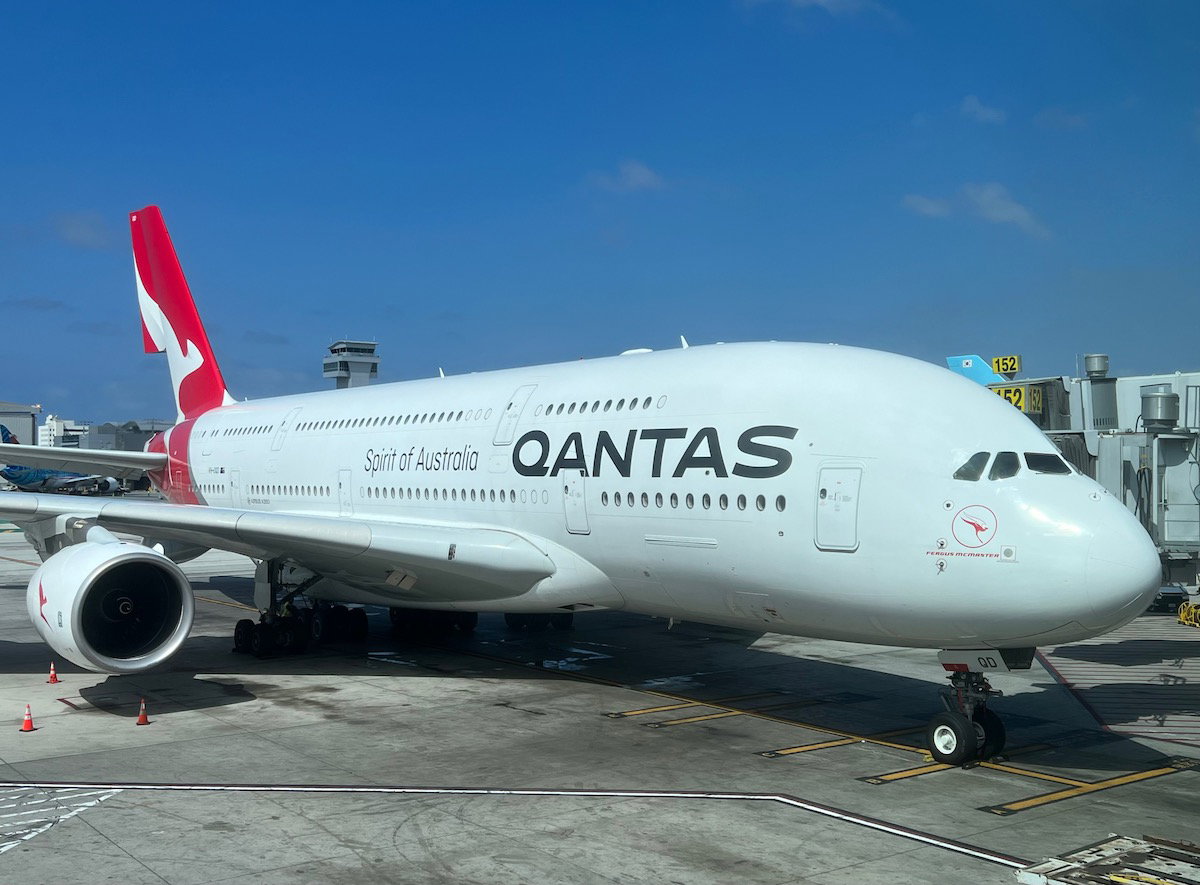
Qantas has announced that it will move forward its Airbus A380 retirement by four years, with the fleet now to be phased out as of 2028. For travelers who don’t enjoy paying a fortune for airfare, that’s also bad news — here’s why.
Qantas Retiring A380s, Replacing Them With A350s
Qantas has a fleet of 10 Airbus A380s, which are an average of around 17 years old. The airline stored these for a few years during the pandemic and only recently reactivated the last A380, so the fleet saw a significant interruption in service.
Up until now, Qantas’ plan had been to start retiring the A380s as of 2032. The airline has now moved that timeline forward by four years to 2028. The retirement process will begin then, though how quickly all aircraft leave the fleet remains to be seen.
Qantas is citing two reasons for the decision — notably, high jet fuel costs are not among them:
- Increasing operational risks and maintenance costs due to supply chain challenges with the A380 fleet, given that the plane is no longer in production
- Confidence in the delivery schedule of new wide-body aircraft, including Airbus A350s and Boeing 787s, which allows the airline to better plan its fleet
In terms of its wide-body order book, Qantas is currently expecting 24 Airbus A350-1000s (half of which are “ULRs”), four Boeing 787-9s, and eight Boeing 787-10s. The intent is for the A380s to be primarily replaced by the A350s. This is separate from the half-dozen A350s designated for “Project Sunrise” flights from Sydney to London and New York.
Beyond Qantas, there are nine other A380 airline operators: All Nippon Airways, Asiana, British Airways, Emirates, Etihad, Korean Air, Lufthansa, Qatar Airways, and Singapore Airlines.
Qantas Is Expecting Higher Ticket Prices With the A350
Qantas is making it clear that the A380s will be replaced by premium-configured Airbus A350-1000s. The capacity difference between the two aircraft is substantial — a reduction of well over 50%:
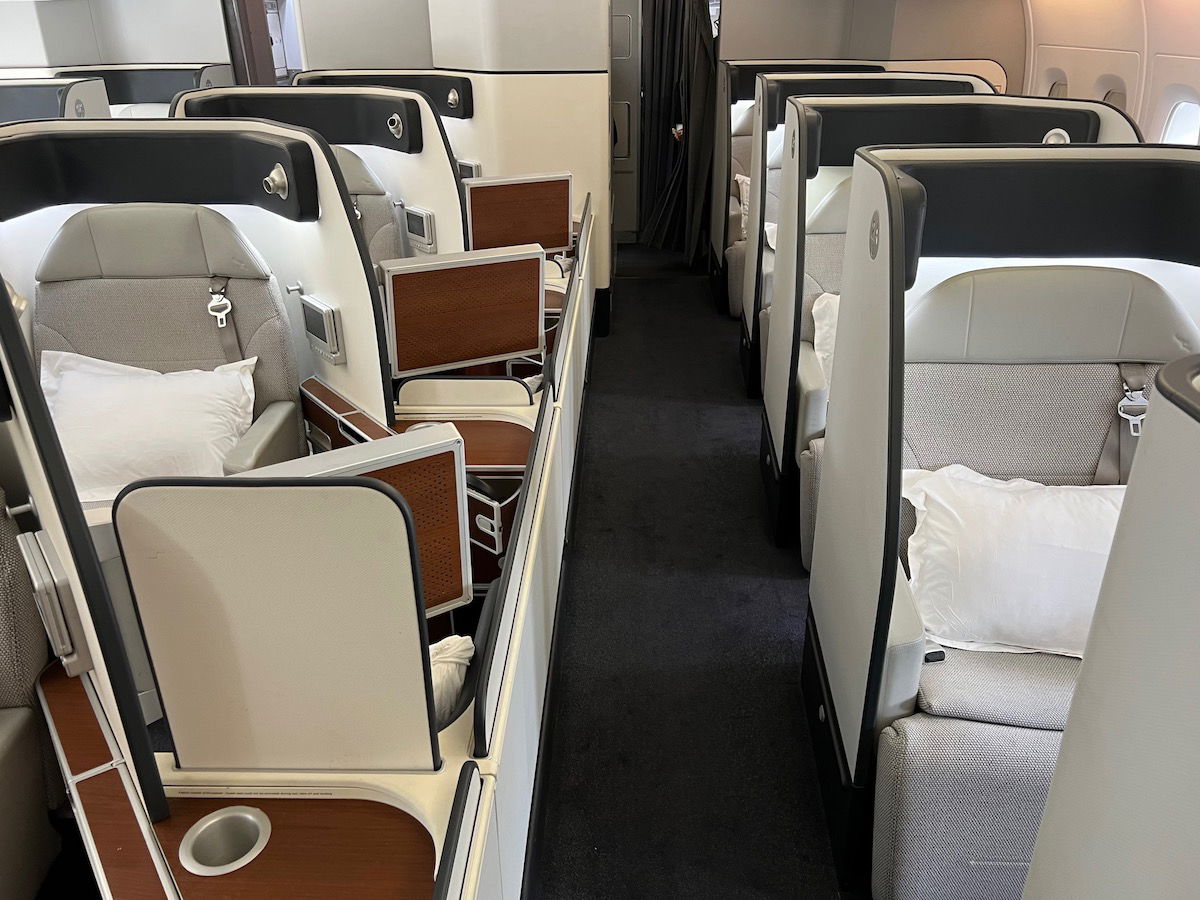
- Qantas Airbus A380: 485 seats — 14 first class, 70 business class, 60 premium economy, 341 economy
- Qantas Airbus A350-1000 (first batch): 238 seats — 6 first class, 52 business class, 40 premium economy, 140 economy
Airline pricing is largely a function of supply and demand, and less capacity generally means higher fares per seat.
Using a Sydney (SYD) to Dallas (DFW) flight as an example in its case to investors, Qantas is projecting a 10% increase in unit revenue and a 12% increase in contribution margin per departure following the aircraft swap. Those increases are unlikely to be evenly distributed across cabins — economy travelers could see the sharpest rises, given the roughly 60% reduction in economy seat capacity.

Bottom Line
Qantas will retire its Airbus A380s starting in 2028, four years ahead of the originally planned 2032 timeline, citing rising maintenance costs and improved certainty around future aircraft deliveries. The replacement A350s carry fewer than half as many passengers, and the airline openly expects this capacity reduction to drive fares up by around 10% — making Qantas flights a notably more expensive proposition for budget-conscious travelers in the years ahead.