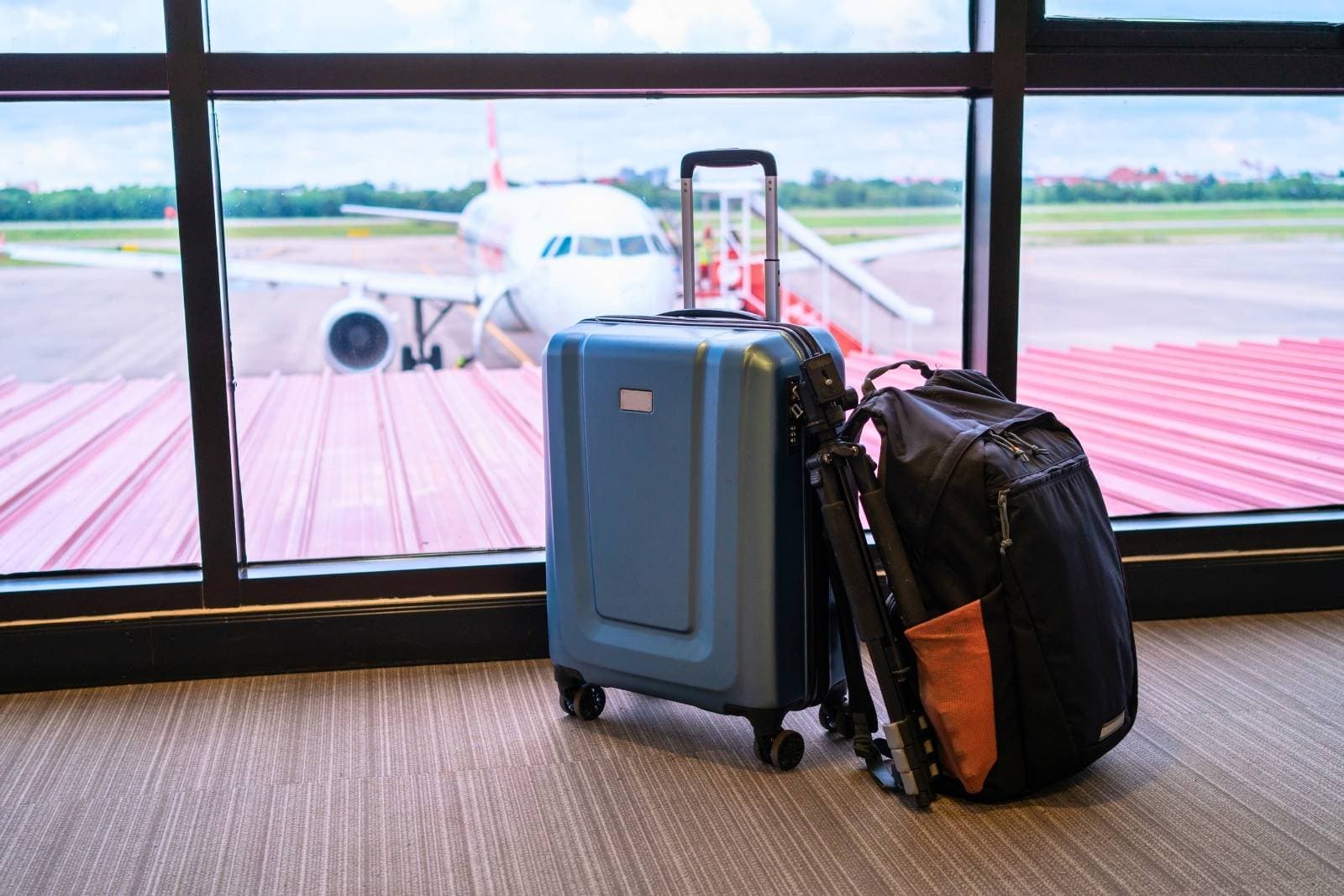
Most travellers now fly with several battery-powered items: a phone, laptop, tablet, camera, headphones, smartwatch, portable charger or vape. But packing one of them in the wrong bag can cause real problems at the airport.
In 2026, aviation safety authorities are warning travellers to pay closer attention to lithium batteries after reports that millions of batteries are still being packed incorrectly. The biggest mistake is simple: power banks, portable chargers and spare lithium batteries should not go in checked luggage.
They belong in your carry-on bag or personal item, where they can be reached quickly if they overheat, smoke or catch fire. This matters even more when your carry-on gets taken away at the gate and sent underneath the plane.
Can You Pack a Power Bank in Checked Luggage?
No. Power banks, portable chargers and spare lithium batteries should not be packed in checked luggage. They belong in your carry-on bag or personal item, where they can be reached quickly if they overheat.
The same goes for loose camera batteries, spare laptop batteries, rechargeable battery packs, vape devices and phone battery charging cases. If your carry-on bag is taken away at the gate and checked underneath the plane, remove all power banks and spare batteries before handing it over.
Phones, laptops, tablets and cameras with batteries installed are treated differently from spare batteries, but the safest habit is still to keep valuable battery-powered electronics in the cabin whenever possible. If an airline allows a device to be checked, it should be completely powered off, protected from damage and prevented from turning on accidentally.
2026 Airline Battery Rules at a Glance
| Item | Checked luggage | Carry-on / personal item | What to know |
|---|---|---|---|
| Power banks | No | Yes | Must stay in the cabin |
| Portable chargers | No | Yes | Treated as spare lithium batteries |
| Spare camera batteries | No | Yes | Protect terminals from short circuit |
| Spare drone batteries | No | Yes | Check airline quantity and watt-hour limits |
| Vapes / e-cigarettes | No | Yes | Do not use or charge onboard |
| Phone charging cases | No | Yes | Treated like external battery packs |
| Laptops | Rules vary | Best choice | Must be powered off if checked |
| Phones | Rules vary | Best choice | Keep with you whenever possible |
| Tablets | Rules vary | Best choice | Keep protected and powered off if checked |
| Smart luggage batteries | Remove before checking | Yes | Bag may be refused if battery is not removable |
The safest habit is simple: power banks, spare batteries and removable batteries stay with you. Valuable electronics are usually better in the cabin too.
Why Are Power Banks Not Allowed in Checked Luggage?
Power banks are not allowed in checked luggage because they contain lithium batteries that can overheat if damaged, poorly packed, overcharged, exposed to heat or affected by a defect.
In rare cases, lithium batteries can enter thermal runaway. That means the battery heats faster than it can cool itself down. It may swell, smoke, burn or ignite.
If that happens in the cabin, passengers and crew can spot the problem quickly. Cabin crews are trained to respond to battery incidents. If the battery is hidden inside a suitcase in the cargo hold, it is much harder to access.
That is why this rule is not just airport red tape. A small charger in the wrong bag can become a serious safety issue.
What Batteries Should Never Go in Checked Luggage?
Before you check a suitcase, look for anything with a loose, spare or removable lithium battery.
These items should stay in your carry-on or personal item:
- Power banks
- Portable phone chargers
- Spare lithium batteries
- Spare camera batteries
- Spare drone batteries
- Spare laptop batteries
- Rechargeable battery packs
- Phone battery charging cases
- Removable smart-luggage batteries
- Vapes and e-cigarettes, where legally permitted
You should also think carefully before checking valuable electronics with installed batteries, including:
- Phones
- Laptops
- Tablets
- Cameras
- Headphones
- E-readers
- Smartwatches
- Handheld gaming devices
Some airlines may allow certain devices with batteries installed in checked luggage if they are completely powered off and protected from damage. But for most travellers, the smarter choice is to keep electronics in the cabin.
Checked bags get dropped, delayed, searched and occasionally sent on their own little vacation. Your laptop does not need that character-building experience.
Spare Batteries vs. Batteries Installed in Devices
This is where the rules confuse a lot of travellers.
A spare battery is any battery that is not installed inside the device it powers. A power bank also counts because it is an external battery used to charge other devices.
A battery installed in a device is different. This includes the battery built into your phone, laptop, tablet, camera, headphones or smartwatch.
| Battery type | Examples | Best place to pack it |
|---|---|---|
| Spare battery | Loose camera battery, drone battery, spare laptop battery | Carry-on only |
| Power bank | Portable charger, phone charging case | Carry-on only |
| Installed battery | Phone, laptop, tablet, camera | Carry-on preferred |
| Removable battery | Smart-luggage battery, some camera grips | Remove before checking |
The easiest rule to remember is this:
If the battery is loose, removable or used to charge something else, do not check it. The FAA’s lithium battery guidance says power banks and spare lithium batteries must travel in carry-on baggage, not checked luggage.
What Happens If Your Carry-On Gets Checked at the Gate?
Gate-checking is one of the easiest ways to accidentally break the battery rule.
You may pack your power bank correctly in your carry-on at home. Then you reach the gate, the overhead bins are full and the agent tags your carry-on to go underneath the plane.
At that moment, your carry-on has become checked luggage.
Before handing it over, remove:
- Power banks
- Portable chargers
- Spare batteries
- Vapes or e-cigarettes, where legally permitted
- Medication
- Travel documents
- Valuables
- Anything you cannot afford to lose
The easiest system is to keep all power banks and spare batteries in one small pouch inside your personal item. If your roller bag gets gate-checked, you can remove the pouch in seconds instead of digging through your suitcase while the boarding line gives you the collective death stare.
What Is the 100 Wh Rule for Power Banks?
Airlines measure lithium-ion battery size in watt-hours, written as Wh.
Most standard phone power banks are under 100 Wh and are usually allowed in carry-on baggage. Larger batteries may require airline approval, and very large batteries are generally not allowed in normal passenger baggage.
| Battery rating | What it usually means |
|---|---|
| Under 100 Wh | Usually allowed in carry-on baggage |
| 101–160 Wh | Airline approval may be required |
| Over 160 Wh | Generally not allowed in normal passenger baggage |
The 100 Wh rule matters most for large laptop power banks, professional camera gear, video equipment and drone batteries.
A typical 10,000 mAh power bank is often around 37 Wh. A 20,000 mAh power bank is often around 74 Wh. Larger power banks can get close to the limit, so check before you pack.
According to CATSA’s battery packing guidelines, travellers should keep batteries and electronic devices containing batteries in their carry-on baggage, avoid damaged or recalled batteries, and protect spare batteries from short-circuiting.
How to Find the Watt-Hours on a Power Bank
The watt-hour rating is usually printed on the label or casing of a power bank. If the label shows milliampere-hours (mAh) instead, you can calculate the watt-hours yourself: multiply the mAh by the voltage (typically 3.7V for lithium-ion cells) and divide by 1,000. For example, a 20,000 mAh battery at 3.7V works out to approximately 74 Wh, well within the standard carry-on limit.
Can Laptops, Phones and Tablets Go in Checked Luggage?
Many airlines technically allow laptops, phones and tablets in checked luggage if they are powered off and protected from accidental activation. However, keeping them in the cabin is strongly recommended. Checked bags face rough handling, temperature extremes and long delays, all of which increase the risk of battery damage. If a device must be checked, power it off completely, pack it securely and make sure nothing can press against the power button.
Are Vapes Allowed in Checked Luggage?
No. Vapes and e-cigarettes contain lithium batteries and must travel in your carry-on or on your person, where legally permitted at your destination. They cannot be used or charged onboard the aircraft. Rules on whether vapes can be carried at all vary by country, so check the regulations for every destination on your itinerary before you travel.
Can You Check Smart Luggage?
Smart luggage with a non-removable battery is banned by most major airlines. If the battery cannot be removed, the bag may be refused at check-in entirely. If your smart luggage has a removable battery, take the battery out before checking the bag and carry it in the cabin with you.
Can You Pack Drones and Camera Batteries in Checked Luggage?
No. Spare drone batteries and spare camera batteries are classified as spare lithium batteries and must travel in carry-on baggage. Check with your airline before flying, as many carriers impose limits on the number of spare batteries allowed and may require watt-hour ratings below a certain threshold for drone batteries in particular.
How to Pack Batteries Safely for a Flight
A few simple steps reduce the risk of damage and keep you compliant with airline rules:
- Keep spare batteries in their original packaging or cover the terminals with tape
- Use a dedicated battery case or small pouch to protect terminals from contact with metal objects
- Do not pack batteries loose in a bag where keys, coins or other items can cause a short circuit
- Store all power banks and spare batteries together in one easy-to-access place in your personal item
- Check the watt-hour rating of any large battery before you travel
Do Not Fly With Damaged or Recalled Batteries
A battery that is swollen, cracked, leaking or showing signs of damage should not go on a plane. Damaged lithium batteries are at much higher risk of thermal runaway. If your power bank looks bloated or has been in an accident, replace it before your trip.
Check whether any of your batteries or devices have been subject to a safety recall. Recalled batteries have occasionally been banned from flights entirely.
What to Do If a Battery Overheats on the Plane
If a battery in your carry-on begins to smoke, swell or feel hot, alert a crew member immediately. Do not put it in an overhead bin. Cabin crews carry containment bags and fire suppression equipment designed for battery incidents. Acting quickly and telling the crew straight away gives them the best chance to manage the situation safely.
Two-Minute Battery Check Before Every Flight
Before you leave for the airport, run through this quick check:
- Are all power banks and spare batteries in your carry-on or personal item?
- Are any spare batteries protected so their terminals cannot short-circuit?
- Is your smart luggage battery removable, and have you taken it out?
- If you are travelling with a vape, is it in your carry-on and switched off?
- Is any battery in your bag damaged, swollen or recalled?
Before You Check Your Bag: Battery Packing Checklist
- Power banks removed from checked bag
- Spare camera batteries removed
- Spare drone batteries removed
- Spare laptop batteries removed
- Vape devices removed
- Smart luggage battery removed
- All spare batteries protected against short-circuiting
- Large batteries checked against airline watt-hour limits
- No damaged or recalled batteries in any bag
Final Advice
The battery rules that apply to air travel exist because lithium battery fires are real, and the cargo hold is the worst place for one to start. The core rule has not changed: spare batteries and power banks belong in the cabin, not in your checked luggage. Keep them in a small pouch in your personal item, know the watt-hour limit for any large battery you carry, and do a quick check before every flight. A two-minute bag audit at home is a lot easier than explaining a confiscated power bank at the security lane.