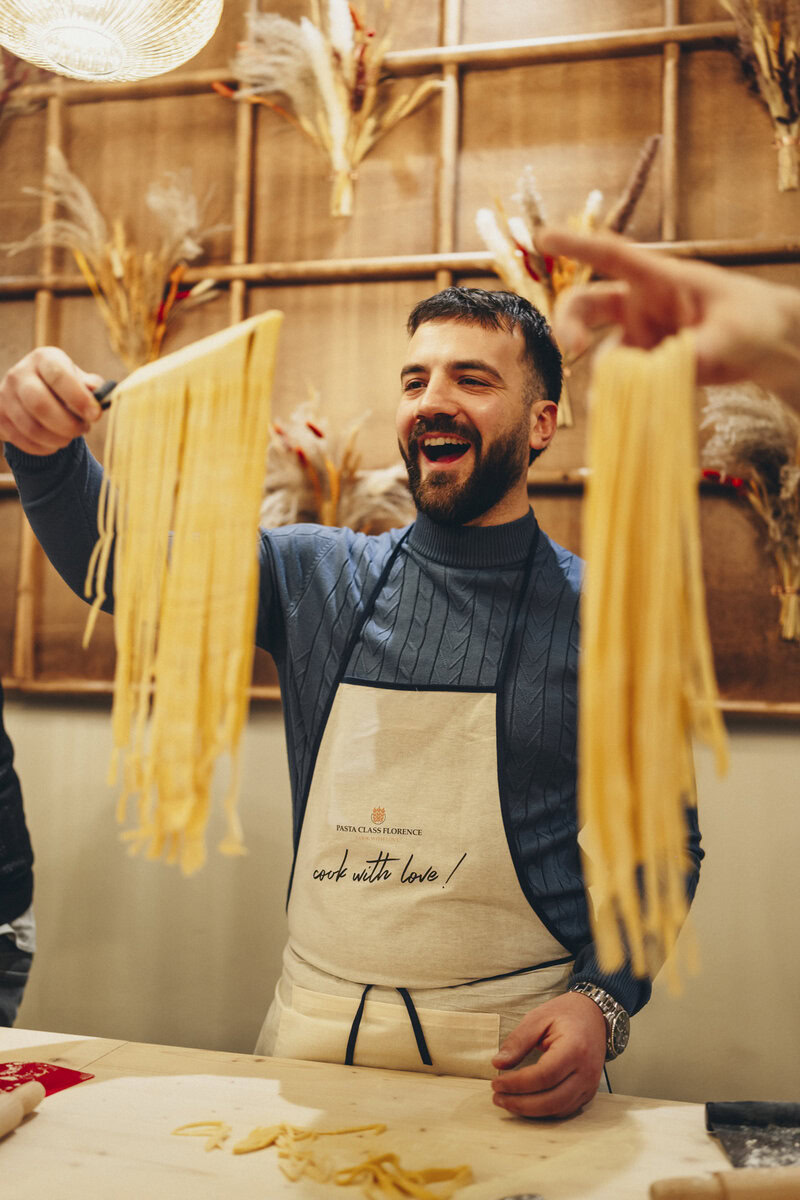
There’s a moment in every class we teach when the room goes quiet. Someone has rolled and folded their sheet of dough, cut it into ribbons, and slid the flat of a knife underneath. They lift their arm, and the tagliatelle fall from the blade in loose strands. People gasp. Then they laugh, because they made that.
This is what a pasta making class in Florence’s Sant’Ambrogio neighborhood looks like from our side of the table. You knead your own dough, cut two long shapes, fold two filled ones, help cook three sauces, and then sit down to eat all of it with people you met a few hours earlier. Here is how the class unfolds, what each step asks of your hands, and what to know before you go.
Book the Class: The Art of Pasta, Nonna’s Recipes
This class is run by Pasta Class Florence in Sant’Ambrogio. Michelin-trained chefs guide you through the dough, the shapes, and the sauces, and the class ends with a full meal of three pasta dishes and Tuscan wine.
Good to know About 3 hours, with afternoon and evening start times €110 per adult and €90 per child up to 12, checked October 2026 Wine is unlimited, and vegetarian options are available Suits couples, solo travelers, families, and groups Only ticket holders can join, so a companion who will not cook needs a ticket too Want the market first? The Market Tour and Pasta Cooking Class adds a guided walk through Sant’Ambrogio market. It takes about 4 hours and costs €150 per adult and €100 per child aged 4 to 16.
Check dates and prices for the pasta class → Or see the market tour and pasta class
This article contains partner links. If you book through them, we may earn a commission at no extra cost to you.
The Room Before Anyone Touches Flour
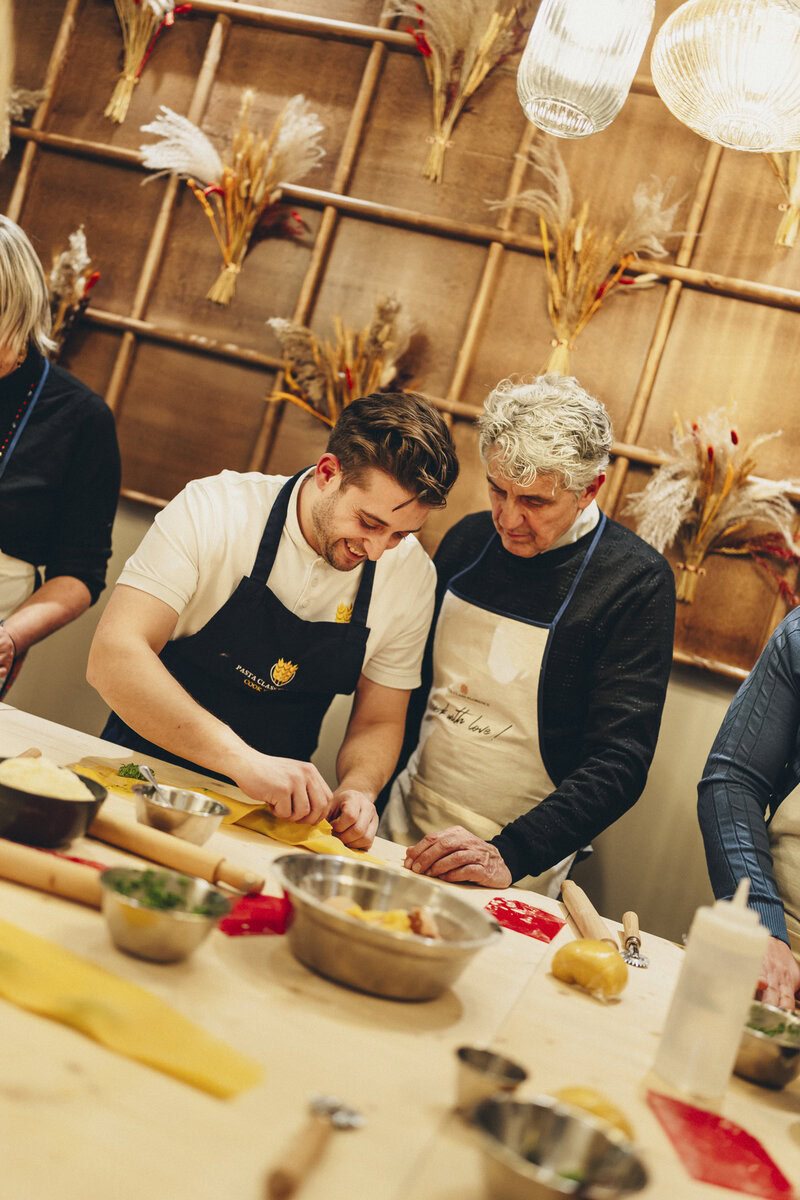
The room is simple. A long wooden table is set with flour and eggs, and dried wheat hangs on the walls. The chef stands at the head of the table while music plays and people introduce themselves, usually in three or four languages.
The air conditioning holds the room at around 20°C (68°F). In July, when Florence’s streets bake in the afternoon, that matters more than it sounds.
Wine is open from the start. You can drink while you work, and most people do.
Your Own Dough, Your Own Hands
Everyone makes their own dough. Guests often don’t expect this. They picture a demonstration where they watch and nod. Here, you make a well in the flour, crack the eggs into it, and mix and knead yourself, following the chef one step at a time.
This is where the chef’s feedback matters most. Dough tells you what it needs through your hands, and a beginner can’t read it yet. Too sticky, too dry, not elastic enough: the chef walks around the table, presses a thumb into your dough, and tells you whether to keep kneading or stop.
For many guests, that one correction is the moment the class clicks. It’s the difference between following a recipe and knowing when the dough is ready.
The Shapes and What They Ask of You
In each class you make three or four shapes, a mix of long and filled pasta. The class teaches tagliatelle, tagliolini, agnolotti, and tortelli. They all start from the same egg dough, but each asks something different of you.
Long shapes come down to the sheet and the cut. If the sheet is rolled to an even thickness, the knife goes through cleanly and the strands hold together in the pot. Filled shapes slow everyone down. The table gets quieter as people concentrate, and the chef’s help becomes most hands-on.
Long Pasta
Long shapes are about the sheet and the cut. If the dough is rolled evenly, the cut goes cleanly and the strands hold together when they cook.
Tagliatelle
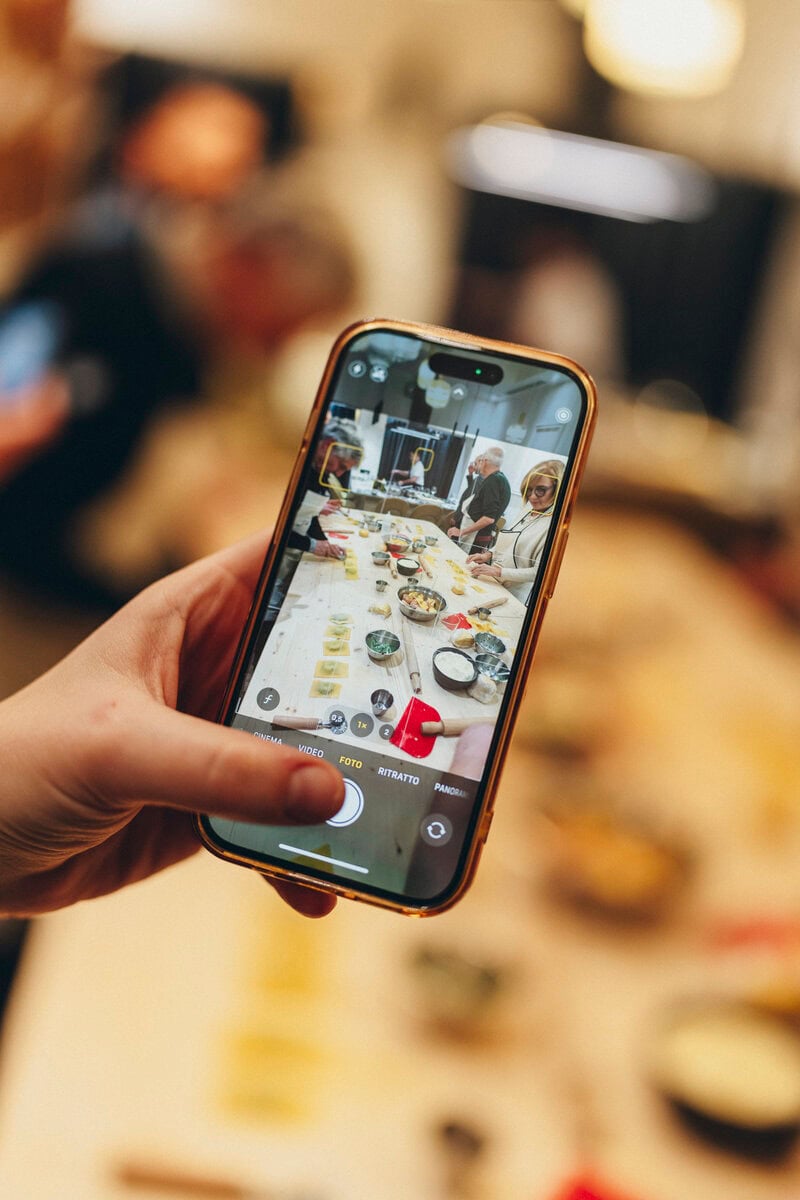
Tagliatelle are flat ribbons, and they’re the shape behind that raining-knife moment. You cut the folded dough, slide the knife beneath it, and lift. If you’ve done it right, the ribbons fall apart from each other instead of clinging in a clump. It’s the most satisfying reveal of the class, and it’s why guests pull out their phones to film each other.
Tagliolini
Tagliolini are narrower than tagliatelle. That’s the main difference, and it’s more demanding than it sounds, because a thinner cut leaves less room for an uneven sheet or a hesitant hand. It’s a good test of how much your hands have picked up since you started.
Filled Pasta
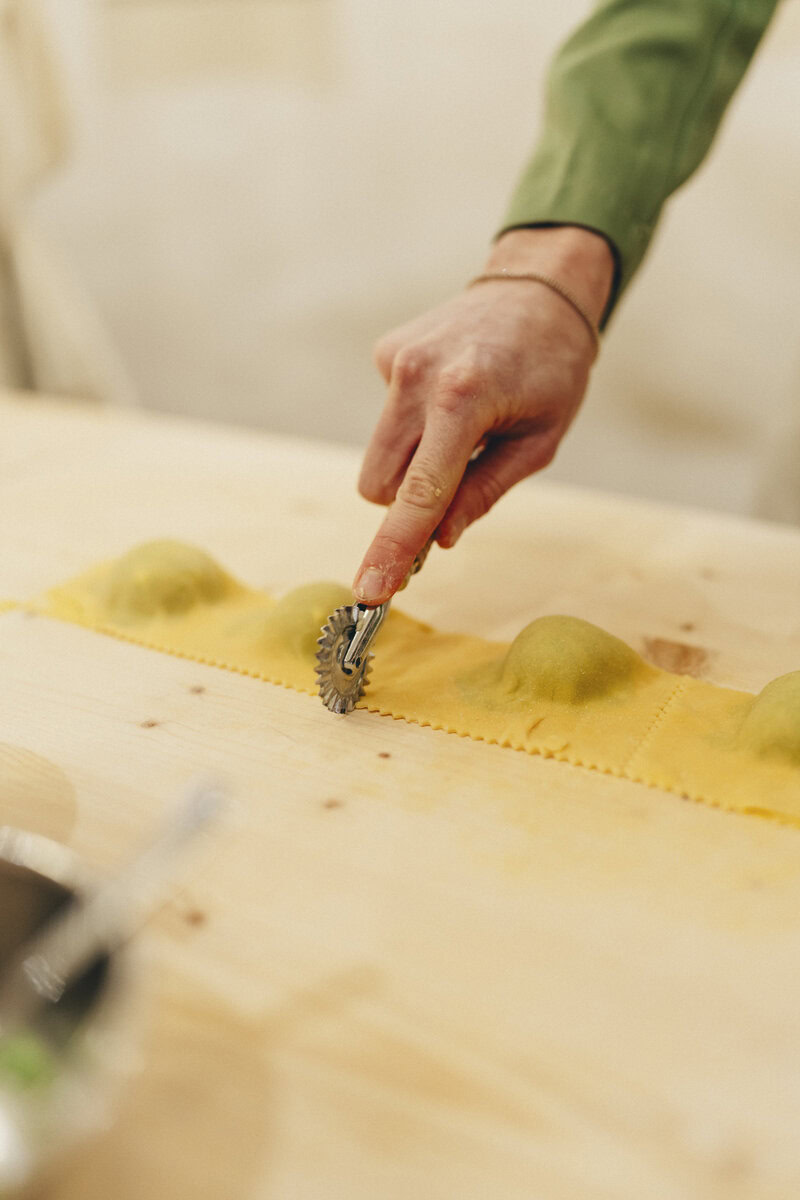
Filled shapes slow everyone down. The table gets quieter as people concentrate, and this is usually where the chef’s help is most hands-on.
Agnolotti
Agnolotti are a filled shape that reward patience. You portion the filling carefully, seal the dough around it, and press out any air before trimming the edges. The seal matters: a pocket of air will burst in boiling water and the filling will be lost. The chef demonstrates the pinch and fold, and then watches while you try it yourself.
Tortelli
Tortelli follow a similar logic to agnolotti but take a different form. Where agnolotti are typically small and folded from a single sheet, tortelli are larger and sealed between two layers. The extra size gives you a little more room to work, but it also means the seal needs to hold over a longer edge.
Cooking the Sauces Together
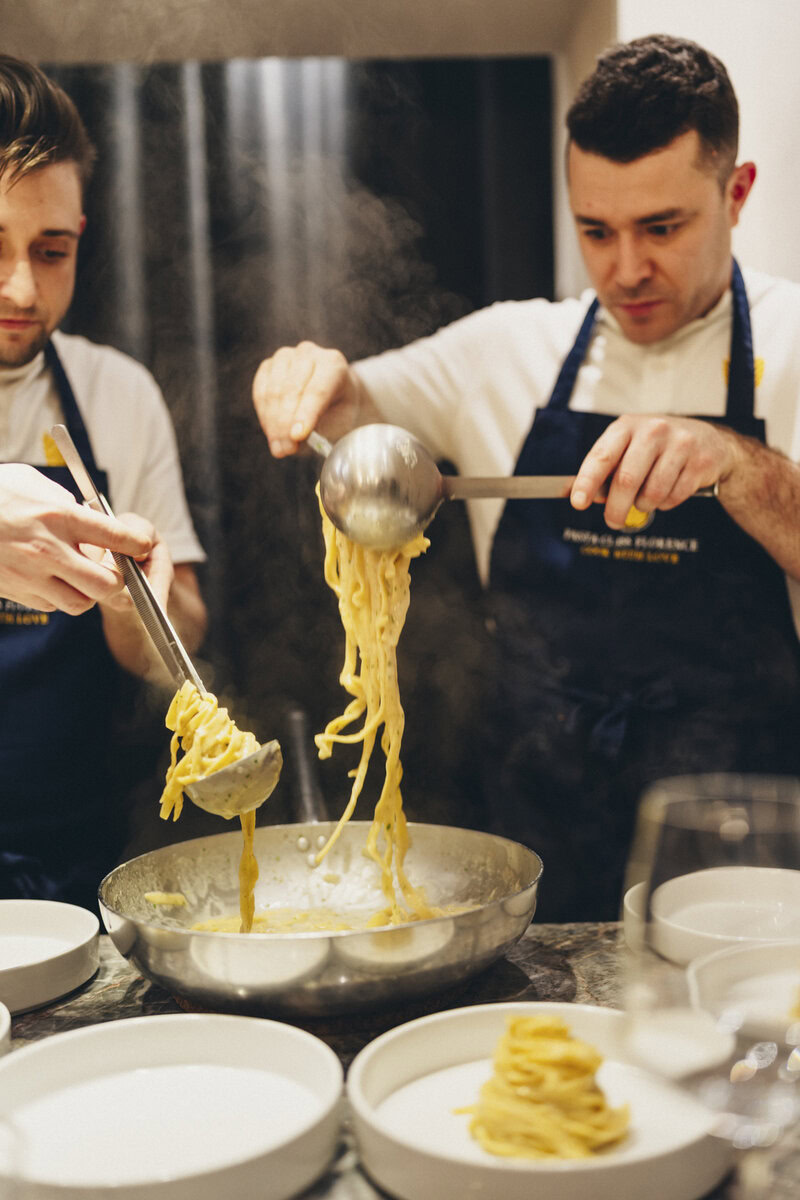
While the pasta shapes are resting, the class moves to the sauces. You help cook three of them, one for each pasta dish you’ll eat at the table. The chef explains which sauce suits which shape and why — the weight of a sauce, its texture, and how it clings to a flat ribbon versus a filled pocket are all part of the lesson.
Where the Recipe Comes From
The recipes in this class trace back to traditional Tuscan home cooking. The chef brings experience from Michelin-level kitchens but teaches the way a nonna would: by feel, by eye, and with corrections delivered at your elbow rather than from across the room.
Sitting Down to Eat
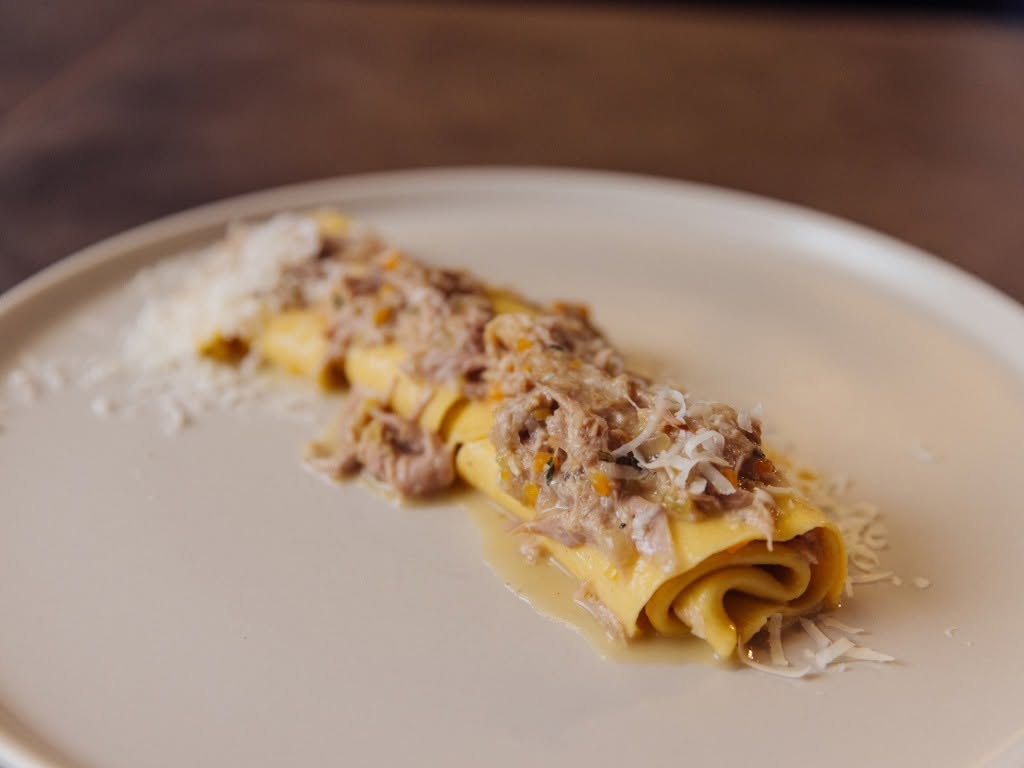
When everything is cooked, the table is cleared of flour and reset for the meal. You eat the pasta you made, across three courses, with Tuscan wine that is refilled without being asked. The group that spent the last few hours comparing dough textures and pinching tortelli tends to eat together as if they’ve known each other longer than an afternoon.
Practical Information
Duration: About 3 hours for the pasta class; about 4 hours for the market tour and pasta class combination
Price:
- Pasta class: €110 per adult, €90 per child up to age 12
- Market tour and pasta class: €150 per adult, €100 per child aged 4 to 16
What’s included: All ingredients, unlimited Tuscan wine, and the full meal at the end
Dietary options: Vegetarian versions are available
Group size: The class suits couples, solo travelers, families, and groups; every ticket holder participates, including companions who attend but don’t plan to cook
Location: Sant’Ambrogio neighborhood, Florence
Check dates and book the pasta class → See the market tour and pasta class →
Frequently Asked Questions
Do I need any cooking experience to take a pasta class in Florence?
No experience is needed. The class is designed for complete beginners and moves step by step, with the chef correcting your technique in person as you go.
What’s the difference between tagliatelle and tagliolini?
Both are flat, long pasta cut from folded sheets of egg dough. Tagliolini are simply narrower than tagliatelle. In practice, the thinner cut is slightly more demanding because it requires a more even sheet and a more confident knife stroke.
Can kids join a fresh pasta class?
Yes. Children are welcome, and the pricing reflects that: €90 per child up to age 12 for the pasta class, and €100 per child aged 4 to 16 for the market tour combination.
Is the Sant’Ambrogio market worth visiting on its own?
Sant’Ambrogio market is one of Florence’s daily food markets and less touristed than the Mercato Centrale. It’s worth a visit on its own, and the market tour option pairs a guided walk through it with the pasta class for €150 per adult.
When is the best time of year to visit Florence for food?
Florence rewards food-focused visits year-round, but autumn brings the best local produce — porcini mushrooms, truffles, and new-season olive oil all appear in the markets and on menus from October onward. The pasta class runs throughout the year, and the climate-controlled room makes it comfortable even during the hottest summer months.
At around €110 per adult, this class sits at the higher end of a coffee-and-pastry budget but well within range for a half-day experience that covers instruction, ingredients, wine, and a three-course meal — making it one of the more complete ways to spend an afternoon in Florence without booking a full restaurant dinner separately.