What Madrid Asks of Your Time - and Your Wallet
Madrid is a city of 3.5 million people that receives over 10 million visitors a year, and it earns that traffic without trying particularly hard. The architecture is serious, the food is serious, and the art collections housed here rival anything in Europe. But it’s also a city that runs on its own clock - dinner rarely starts before 9pm, and the nightlife doesn’t peak until well after midnight - which means your five days will stretch longer and cost differently than you might expect.
The good news is that Madrid’s major expenses are front-loaded and predictable. Museum entry, food, and transport can all be budgeted in advance if you know where the money actually goes. What follows is a day-by-day breakdown of where your euros will work hardest.
Day 1: The Art Triangle and Its Admission Fees
The first full day runs through the Paseo del Prado corridor, a UNESCO World Heritage-designated area since 2021, containing over 40 monuments and 40 buildings. It’s the densest concentration of world-class art museums in the city, and visiting all three in a single day is doable if you pace yourself.
Start at the Prado Museum, the anchor of the route. The collection spans El Greco, Velázquez, Goya, Rubens, Botticelli, and Caravaggio, among others. Plan a minimum of three hours - two won’t be enough if you’re serious. A 10-minute walk along the Paseo del Prado leads to the Thyssen-Bornemisza Museum, a private collection that runs from the Renaissance through to Pop Art. The route ends at the Reina Sofía National Art Center, which holds works by Picasso, Miró, Dalí, Kandinsky, and Bacon. Picasso’s Guernica - a 1937 oil painting widely considered the most significant anti-war artwork ever created - lives here, and it’s the kind of thing that stops you mid-step.
After the museums, eating well near the route doesn’t require spending heavily. Taberna La Fragua de Vulcano handles the traditional end of things, with cocido madrileño in a rustic setting. Near the Reina Sofía, Arzábal’s garden terrace is known specifically for its croquetas. For something stranger and more atmospheric, Bodega de los Secretos lets you eat inside restored 17th-century wine caves close to the Prado. None of these are tourist traps, but none are cheap either - budget the evening meal as your biggest daily food spend.
The afternoon can be used for Madrid’s House Museums, former private palaces that read more like time capsules than institutions. The Sorolla Museum - home to the sun-filled canvases of Joaquín Sorolla - is currently undergoing architectural renovation and is set to reopen in 2026. In the meantime, the Museum of Romanticism has a quiet garden café worth a stop, and the Lázaro Galdiano Museum holds a private collection that includes Goya, Murillo, Velázquez, El Greco, and Bosch, housed inside a neo-Renaissance mansion that most visitors walk straight past.
Day 2: The Historic Center, Where the Free Stuff Lives
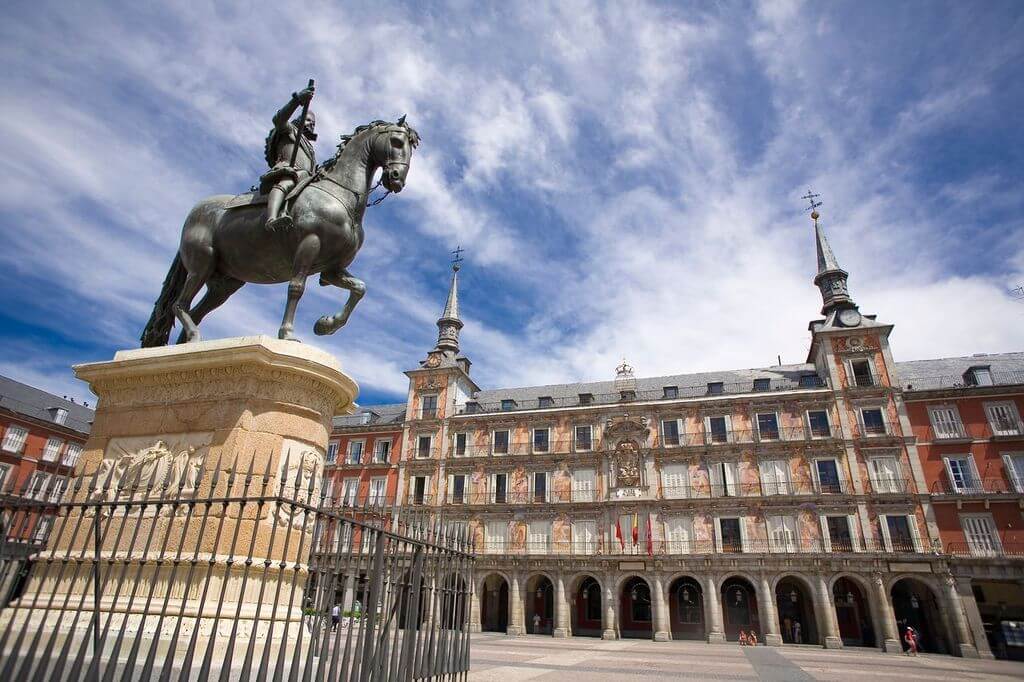
Madrid’s medieval and Renaissance core is where the city’s public spaces do the heavy lifting. The streets around the Plaza Mayor and the streets feeding into the old town are genuinely walkable and cost nothing to explore.
This is also the part of the trip where you can recover some of the first day’s museum spend. The architecture carries its own weight - the scale of the historic center means that simply walking through it counts as the activity.
Where the Daily Budget Actually Lands
Food Costs
Madrid’s food culture operates across a wide price range, but the baseline is generous. A proper lunch menu - a fixed-price midday meal that typically includes three courses, bread, and a drink - runs between €12 and €15 at most sit-down restaurants outside the tourist core. Tapas in a bar can be cheaper, but the best versions of Madrid’s specific dishes (cocido madrileño, croquetas, tortilla española) are worth paying for at a real restaurant at least once.
Breakfast is rarely expensive. Coffee and a pastry at a neighborhood café will run €2–€3. The real cost variable is dinner, since Madrid’s late-eating culture means restaurant meals naturally drift toward the pricier end of the menu - you’re not grabbing something quick, you’re committing to an evening.
Museum Costs
The Prado, Thyssen-Bornemisza, and Reina Sofía each charge separate entry. Budgeting roughly €15–€18 per museum is a reasonable starting point, though prices shift seasonally and for temporary exhibitions. The Prado and Reina Sofía both offer free entry during specific evening hours - check current schedules before you go, since this can meaningfully reduce Day 1’s total cost. The House Museums tend to run cheaper, with several under €5.
Transport Costs
Madrid’s metro is efficient and well-priced. A 10-trip metro card (Metrobús) costs around €12.20 and covers most of what you’d need inside the city center. Single-ride tickets run €1.50–€2 depending on zone. The Paseo del Prado corridor is walkable end-to-end in under 20 minutes, so on an art-focused day, you might not need the metro at all.
The Five-Day Running Total
Five days in Madrid, done properly, will run most travelers between €700 and €1,000 including accommodation - assuming mid-range hostels or budget hotels at roughly €60–€90 per night, a mix of sit-down meals and market lunches, and full museum access on two or three days. That’s not rock-bottom, but Madrid doesn’t ask you to go rock-bottom. The city’s pricing is fair enough that cutting aggressively tends to mean cutting the wrong things.
The spend that’s hardest to skip is Day 1. The Art Triangle alone - entry to all three major museums - can run €45–€55 before food. If that’s tight, prioritize the Prado and use the Reina Sofía’s free evening hours for Guernica. The Thyssen is the easiest of the three to return to on a future trip.
One figure worth holding onto: the Bodega de los Secretos, for all its theatrical atmosphere, is not a budget dinner. It’s the kind of place you go once, deliberately, knowing what you’re spending. Factoring it in as a planned splurge rather than a casual choice keeps the overall budget intact.