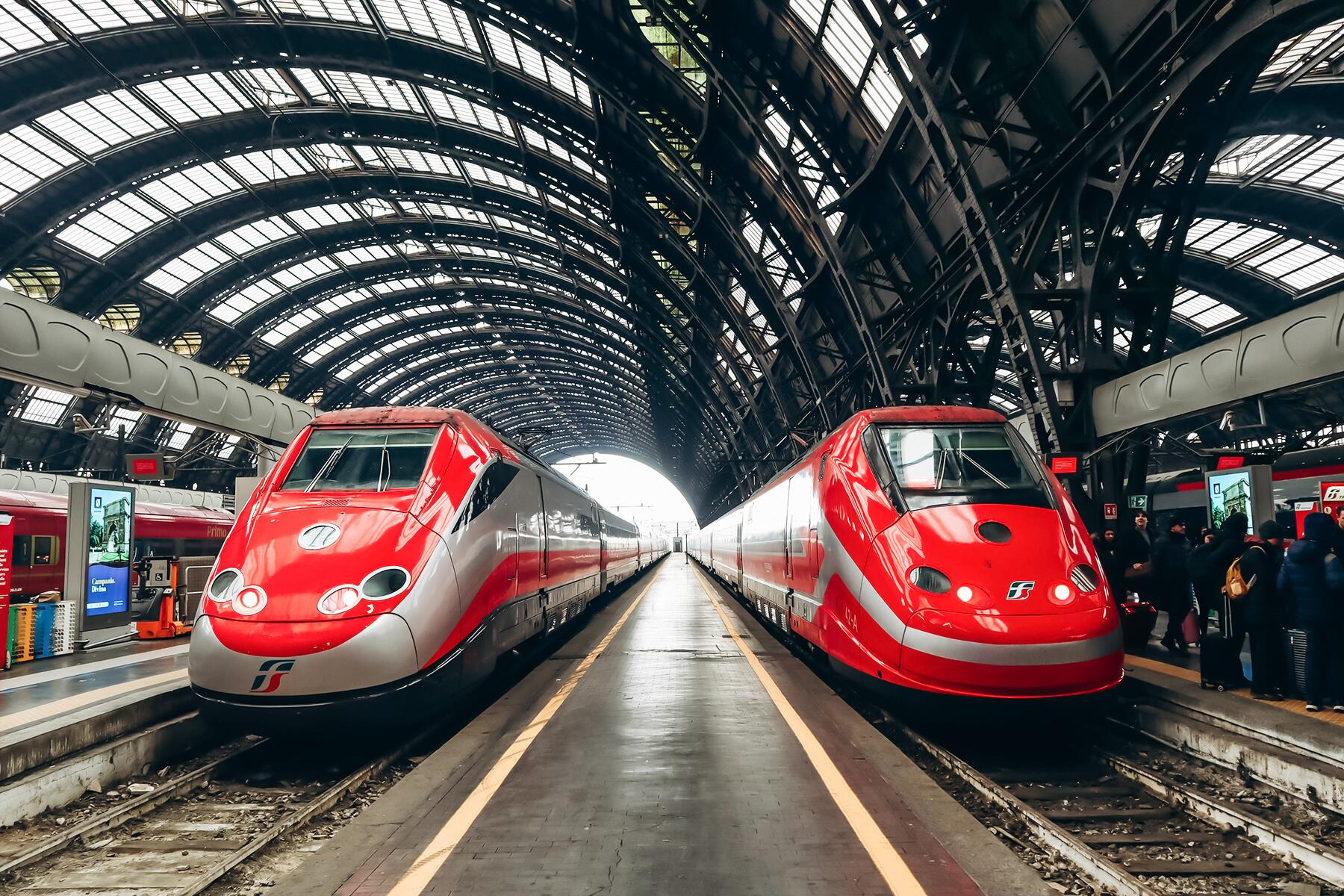
Europe’s extreme heat wave is disrupting rail travel, causing train delays, cancellations, and infrastructure issues across France, Belgium, the U.K., and beyond.
Europe is in the midst of a record heat wave, and it’s impacting high-speed rail operations.
France recorded its hottest day ever on Tuesday, with the daytime high in some cities reaching 104°F. Paris’s Eiffel Tower and Louvre Museum restricted visiting hours, while schools and other government offices also experienced schedule disruptions.
High-speed train services across the continent were also impacted. France cancelled 71 intercity rail services on Monday on account of high temperatures. In many countries, high-speed rail infrastructure, while modern, is still aging — and was conceived and designed in cooler eras. In France and Belgium, some of the high-speed trainsets are several decades old, and not built for the realities of the hotter summers now commonplace.
In the United Kingdom, passengers were told to avoid rail travel unless necessary. London’s Gatwick Express suspended some early afternoon express trains between London and Gatwick Airport, although slower local services remained in operation.
Why Heat Disrupts High-Speed Rail
In France and Belgium — which use the same trainsets — the air conditioning units in many older train cars will shut off if they get too hot, forcing operators to take them out of service.
Another problem is the tracks themselves. Many of Europe’s high-speed rail networks are electrified, with trains receiving power from overhead electrical wires called catenaries. Heat can cause these wires to expand and droop, blocking rail lines because drooping electrical wires become a snagging hazard for passing trains.
National rail services have also reported out-of-service signals and tracks warped by extreme heat, increasing the risk of derailment. Rail systems have modern safety backups that alert engineers and monitors of technical problems — whether involving tracks or overhead wires — but taking trainsets or portions of the network out of service for repairs still causes delays, reroutes, and cancellations.
The current heat wave has been particularly severe in that it has lasted nearly a week without overnight relief, meaning rail networks have been exposed to elevated temperatures for longer than during any comparable event. Previous heat waves in August 2003 and July 2019 were not as long-lasting.
How Europe Compares to Other Regions
Europe isn’t the only region with rail networks affected by hot weather, but its heat-related disruptions are unique. The U.S. and Canada don’t have similar high-speed rail networks — most of their trains are diesel-powered. In the U.S., electric catenaries are only used in the high-speed Northeast Corridor. In other hot countries across Africa and Asia, trains are also diesel-powered and not the high-speed variety common in Europe.
What Rail Operators Are Doing
As heat waves are expected to become more frequent and more intense, rail operators are exploring ways to heat-proof their networks. One option is imposing speed limits during hot weather to prevent tracks from overheating, though this would still cause delays. Another approach is painting tracks white to reflect and disperse heat — a method already found to be effective in the United Kingdom and Italy.
Tips for Travelers
For now, rail travelers in Europe should check their train schedules before leaving for the station to monitor for delays or cancellations. Those planning journeys during the hot summer months can also reduce the risk of heat-related disruptions by traveling in the early morning or late evening when temperatures are cooler, though extended heat waves can produce knock-on delays across multiple days.
Elevated temperatures in France are forecast to last through at least the weekend, with Paris expected to reach highs of 101°F on Thursday — roughly 30 degrees higher than normal for June.