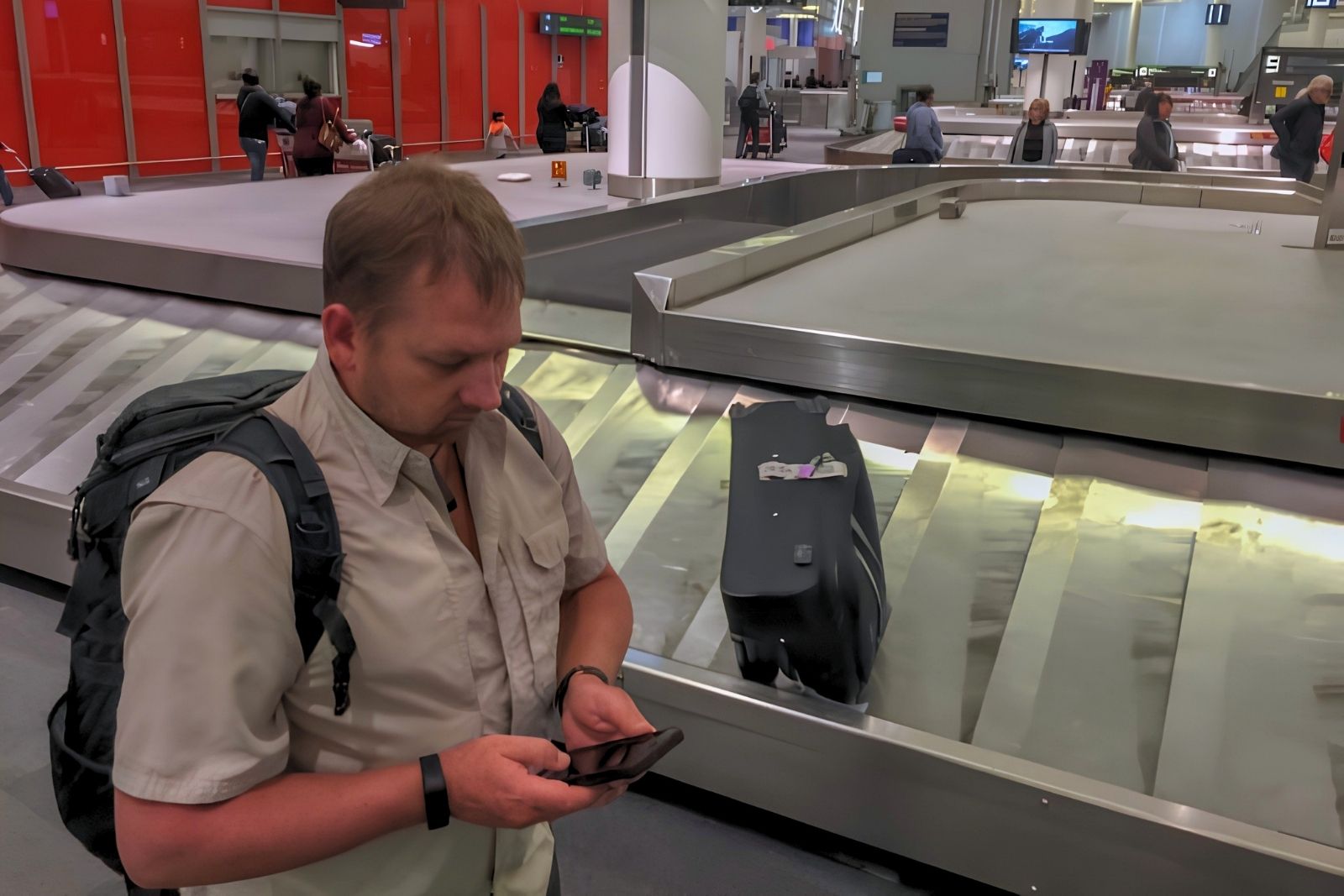
Imagine walking up to customs after a long international flight and being told that a suitcase connected to your name has been flagged.
You say, “That’s not my bag.”
Then the officer points to the luggage tag and says, “Then why is your name on it?”
That is the nightmare behind a luggage scam travelers need to understand in 2026. It is called baggage tag switching, and it is exactly what it sounds like: the luggage tag from an innocent passenger’s checked suitcase is allegedly removed and placed onto another bag.
Quick Answer: Baggage tag switching scams happen when the luggage tag from a traveler’s checked bag is allegedly removed and placed on another suitcase. To protect yourself, take a video of your suitcase before check-in, photograph the bag on the scale, take a close-up photo of the baggage tag, keep your baggage receipt, place a tracker inside your suitcase, and report any damaged, missing, delayed, or retagged bag before leaving the airport.
According to a W5 investigation, innocent passengers flying from Canada have been detained after their real luggage tags were allegedly moved onto suitcases containing illegal drugs. The investigation focused on flights from Canada and alleged cases connected to Toronto Pearson, but the larger lesson applies to travelers everywhere: once your checked bag disappears behind the counter, you are trusting the system to protect your luggage, your tag, and your name.
Why This Luggage Scam Matters in 2026
In 2026, protecting your checked luggage is not just about stopping theft. It is about protecting the paper trail that connects you to your bag.
This is part of a bigger shift in how travelers need to think about airport safety, baggage scams, and common airport security mistakes before they fly.
Quick Overview: How to Protect Your Checked Luggage in 2026
Before you check a bag, take two minutes to create proof that the bag is yours.
- Take a video of your suitcase before handing it over.
- Film or photograph your bag on the scale.
- Take a close-up photo of the attached baggage tag.
- Keep your baggage receipt until your bag is back in your hands.
- Put a luggage tracker inside your suitcase.
- Photograph the inside of your suitcase before closing it.
- Check your bag carefully when it arrives.
- Report missing, damaged, delayed, or retagged luggage before leaving the airport.
- Never carry anything for someone else.
- If authorities question you about a bag that is not yours, stay calm, ask for legal assistance, and show your documentation.
It also helps to run through a full pre-travel checklist before you leave for the airport so you are not rushing through check-in.
This may sound like a lot, but it takes less than two minutes at check-in. And those two minutes could matter if your name ever gets attached to a suitcase that is not yours.
What Is Baggage Tag Switching?
Baggage tag switching is when the tag printed for your checked luggage is removed from your actual suitcase and attached to another bag.
When you check luggage, the airline prints a baggage tag that usually includes your name, flight, destination, routing information, barcode, and bag number. That tag is the airport system’s way of connecting that suitcase to you.
The problem is that once your bag goes behind the counter, you cannot see what happens next.
In the alleged scheme reported by W5, corrupt baggage or ramp workers could remove a legitimate tag from a passenger’s suitcase and attach it to another suitcase heading to the same destination. If that second bag is intercepted, the paperwork points back to the innocent passenger.
That is what makes this scam so dangerous. You may have done everything right: checked your own suitcase, kept your boarding pass, and boarded your flight. But behind the scenes, one strip of paper may now connect your name to a bag you have never seen.
Most airport workers are honest. The vast majority are doing hard jobs under pressure, moving thousands of bags through complex systems every day. But a baggage system only needs a few bad actors to create a very serious problem.
Why This Matters for Travelers Everywhere

This story has received attention because of Canadian cases, but this is not only a Canada problem.
The bigger issue is that every major airport has the same basic weak point: you hand over your suitcase, it enters a restricted area, and from that point on, you are relying on the system to protect the tag, the bag, and the records connected to your name.
That is true in Toronto. It is true in New York, London, Paris, Dubai, Bangkok, Mexico City, Sydney, and anywhere else checked luggage moves behind the scenes.
International travel also adds another layer of risk. If your name gets tied to a suspicious bag in another country, you may be dealing with a different legal system, different customs procedures, and possibly a language barrier.
The Government of Canada warns travelers that drug offences abroad can have serious consequences and that you should never carry anything across a border for someone else. The Canada Border Services Agency also specifically reminds travelers that trafficking cannabis or other drugs across the border is a criminal offence and warns people to beware of anyone asking them to carry something.
That is why documenting your own luggage matters. You are not being paranoid. You are creating a simple evidence trail.
How to Protect Your Checked Luggage
Step 1: Take a Video of Your Bag Before You Check It
Before your suitcase disappears behind the counter, take a clear video of it.
Do a full 360-degree view. Show the front, back, sides, wheels, handles, color, brand, straps, stickers, scratches, dents, or anything that makes your bag identifiable.
Yes, you may feel ridiculous filming your suitcase at the airport. Do it anyway. People film lattes. You can film the thing that might keep you out of a holding room.
This video creates a time-stamped record of what your suitcase looked like before it left your hands. If someone later claims a different bag is yours, you have proof of what your actual luggage looked like at check-in.
Step 2: Record Your Bag on the Scale
When your bag is placed on the airline scale, take a quick photo or video showing the weight.
This matters because weight is part of the paper trail. If your suitcase weighed 19 kilograms at check-in and another suitcase connected to your name weighs 32 kilograms, that difference may matter.
You are not trying to become a detective. You are simply creating a record that says this was your bag, this was the weight, this was the condition, and this was the tag attached to it.
That is the kind of simple documentation that can help if your bag is delayed, damaged, retagged, or questioned later.
Step 3: Photograph the Baggage Tag After It Is Attached
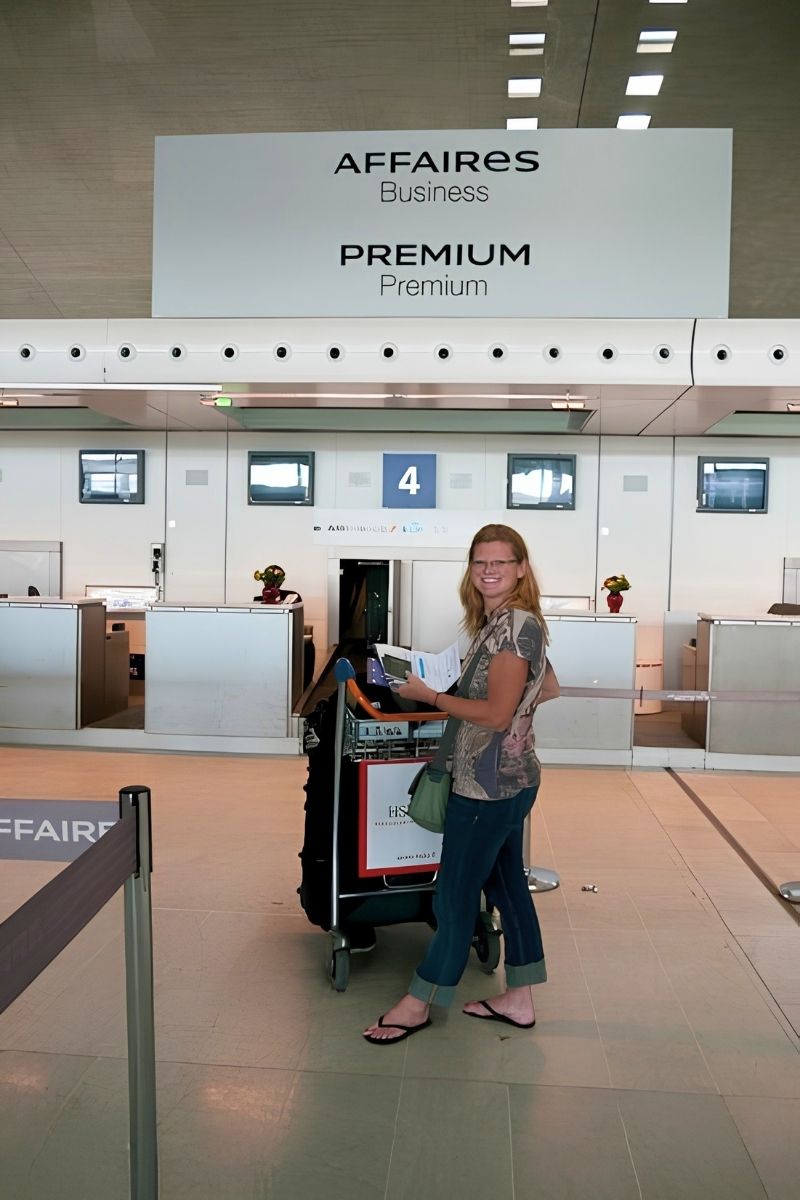
Once the agent attaches the baggage tag to your suitcase, take a close-up photo of it before the bag is sent down the belt. The photo should be clear enough to read the tag number, your name, and the destination. This gives you a record of exactly which tag was on your bag at the moment it left your hands, and connects that tag to the suitcase you documented in your video.
Step 4: Keep Your Baggage Receipt
The agent will hand you a baggage claim receipt, usually as a sticker on your boarding pass or a separate slip. Keep it. Do not throw it away until your bag is back in your hands at your destination.
That receipt contains the same tag number printed on your suitcase. It is the official airline record connecting you to your bag, and it is one of the first things you will need if something goes wrong.
Step 5: Put a Tracker Inside Your Suitcase
A luggage tracker — such as an Apple AirTag, a Tile, or a similar GPS or Bluetooth device — placed inside your suitcase gives you a live record of where your bag is at any point in its journey.
If your bag goes to the wrong city, gets held in a restricted area, or stops moving entirely, a tracker will show you exactly where it is. That information can be critical when filing a report with the airline or with authorities.
Place the tracker inside the bag, not attached to the outside, where it could be removed.
Step 6: Photograph the Inside of Your Suitcase
Before you close and check your bag, take a quick photo of the contents. You do not need to document every item in detail. A general photo showing what is inside creates a record of what your bag contained at the time of check-in.
This matters if your bag is opened, searched, tampered with, or if someone later claims items were inside that were not yours.
Step 7: Inspect Your Bag When It Arrives
When your suitcase comes off the baggage carousel, do not just grab it and walk away. Take a moment to check it before you leave the baggage claim area.
Look at the tag. Make sure it is the same tag from your photo. Check that the bag itself matches your video. Look for signs of tampering, damage, or anything that seems different from when you checked it in.
If anything looks wrong — a different tag, a different bag, damage that was not there before — report it immediately. Do not leave the airport first.
Step 8: Report Problems Before Leaving the Airport
If your bag is missing, delayed, damaged, or has a tag that does not match your receipt, go to the airline’s baggage desk before you exit the airport. File a written report and get a copy of it.
If you believe your tag has been switched or your bag has been tampered with, you can also report the issue to airport security or customs authorities on the spot.
Leaving the airport before reporting a problem makes it significantly harder to resolve later.
What to Do If Authorities Question You About a Bag That Is Not Yours
Stay calm. Do not argue or resist. Clearly state that the bag is not yours and that you have documentation to prove what your actual suitcase looked like at check-in.
Show your video, your photos, your baggage tag photo, and your receipt. Ask to speak with legal representation before answering detailed questions, especially if you are traveling internationally and are unfamiliar with local procedures.
The documentation you created at check-in exists precisely for this moment. Having a clear, time-stamped record of your bag before it left your hands gives you something concrete to present, and that can make a significant difference in how quickly a misunderstanding is resolved.
The Two-Minute Habit That Can Protect You
None of these steps require special equipment or extra time beyond a couple of minutes at the check-in counter. A phone, a baggage receipt, and a tracker are all you need to build a paper trail that connects you to your bag from the moment you hand it over to the moment it comes back to you.
Baggage tag switching is not something most travelers will ever experience. But for the small number who do, having documentation on hand is the difference between being able to prove your case and having nothing but your word. Taking two minutes at check-in is a straightforward habit worth adding to every trip.