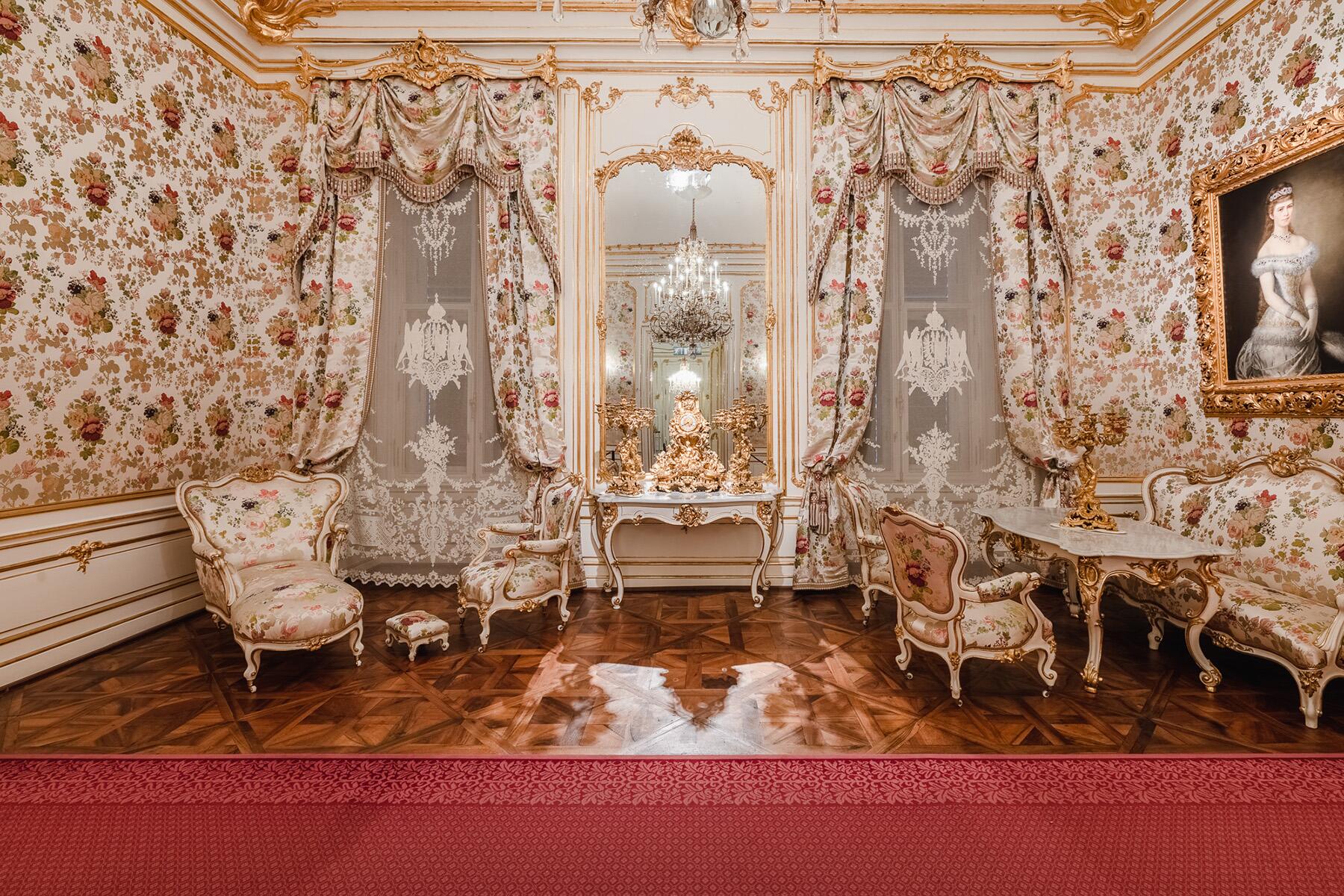
Echoing through Vienna’s Schönbrunn Palace are historical tales of blood-lusting ghouls.
No serrated fangs, no pointed ears, no bloodied mouths. Dozens of real portraits hang above my head as I wander the lavish interiors of Schönbrunn Palace, Vienna’s chief attraction and longtime headquarters of the Habsburg Royal Family. These paintings capture key members of that powerful European dynasty, but do not depict the immortal beasts which long lurked over their shoulders.
Nowadays, vampires are the stuff of fantasy novels. Four centuries ago, however, many people considered them a dangerous reality. During the 17th and 18th centuries, Schönbrunn Palace investigated dozens of incidents across its vast territories involving supposed supernatural bloodsuckers. Most were swiftly proven false. But two cases proved so eerie that they rattled the Habsburg royals.

One was unnervingly complex, focusing on a mysterious man from Medveda (now a town in Serbia) who claimed to gain magic powers by eating dirt, then died in strange circumstances. Allegedly, he rose from the dead as a murderous beast known as the Medveda monster.
The other case was terrifyingly real. It centered on Elizabeth Bathory, a noblewoman dubbed the Vampire Countess, who tortured and murdered 600 girls on Habsburg lands. She’s said to have bathed in their blood, believing it would grant her eternal life.
The Vampire Countess and the Medveda monster remain central figures of Vienna’s unique vampire legacy. Yet tourists will find no mention of this ghoulish past at Schönbrunn Palace, nor in the Austrian capital’s many commanding museums.
Vienna’s Imperial Beauty
Renowned for its austere beauty, Vienna hugs the Danube River and is encircled by forest and hills. This city’s tourism appeal, however, derives less from those natural features and more from the timeless grace of its architecture. Innere Stadt, Vienna’s UNESCO-listed historic center, is particularly striking, with its splendid mélange of Gothic and Baroque churches, monasteries, palaces, museums, libraries, and performance venues. But nothing compares to the majestic beauty of Schönbrunn Palace. I spent nearly an entire day at this sprawling Imperial compound, about three miles west of Innere Stadt, where more than forty of the palace’s 1,441 opulent rooms were accessible.
My eyes didn’t know quite where to pause amid the bold interior design features. Priceless paintings occupy walls papered in vivid colors. Chandeliers the size of cars hang from ceilings covered by complex frescoes. Parquet floors feature delicate, dancing wooden patterns. Furnishings are often gilded and always gaudy. All this excess reaches a zenith in the Grand Gallery. Some 140 feet long and 33 feet high, it is Schönbrunn’s ceremonial hall, the venue for official state visits.


Peering out the window, I spotted an enormous park flanking Schönbrunn Palace. Couples walked trails through its forest. Friends picnicked on its soft lawns. Families navigated the hedge-lined labyrinth. Photographers captured the pretty palettes of its flower-filled Crown Prince and Orangery gardens. Hundreds of exquisite statues and sculptures dot this park, which extends up a hill, at the crest of which rests the magnificent Gloriette — an 18th-century scenic lookout decorated by soaring arches, arcaded wings, and an Imperial eagle sculpture. It provides wide vistas across greater Vienna.
The Dark World of the Vampire Countess
Schönbrunn Palace was a suitably grand headquarters for the Habsburgs, who ruled Austria and swathes of Europe between 1281 and 1918. By the early 1600s, this dynasty was headed by Emperor Matthias, who commanded parts of what are now Austria, Hungary, Croatia, and the Czech Republic. Across his territory, sorcerers conjured curses, lesbian orgies turned violent, alchemists mixed magic potions, and servants were tortured for fun. This was the wild world Bathory, the Vampire Countess, was steeped in. She was born in 1560 into a powerful Hungarian dynasty. Her family ruled one section of Hungary, and the rest was Habsburg territory.
Despite her elite status, Bathory’s upbringing was grim. Her family was riddled with genetic disorders due to inbreeding, and she suffered epilepsy and unpredictable moods from the age of four. Throughout her childhood, she witnessed horrific acts, including executions and heinous beatings of her family’s servants.
Then, at age thirteen, Bathory married eighteen-year-old Count Ferenc Nadasdy, from a fellow Hungarian dynasty. He further warped her young mind. Several times, this heartless man had females savagely assaulted in front of Bathory. During one such sadistic show, Nadasdy restrained a girl, covered her in honey, and let hundreds of insects slowly eat her alive. He also gifted Bathory spiked gloves, which she used to thrash servants until they bled profusely.
Soon, her evil outstripped even his. Bathory ran rampant, slaying countless young women, including in a home she kept in central Vienna, near where Schönbrunn Palace is now located. Rumors of her serial killing reached the Habsburgs, yet the royals did not take these reports seriously.
After Bathory’s husband died in 1604, she set up a torture chamber at Cachtice Castle, in Habsburg territory (now modern-day Slovakia). Over the next six years, dozens of girls disappeared from the area. Gossip spread that they were tormented and slain by Bathory, who bathed in their blood in the belief that it would preserve her youth and grant her eternal life — a legend that would cement her place as history’s most notorious Vampire Countess.