No one forgets their first lion in the wild, walking the plain or dozing in the sun. But the trips guests talk about years later aren’t only the ones with the best sightings. They’re the ones where a game drive ends with a massage over the savannah, a mountain hike gives way to yoga at dawn, or a beach meditation comes before an afternoon at sea with dolphins.
Kenya delivers the adrenaline; a wellness element gives your body a way to absorb it. This guide shows how to build that trip across three settings — the Masai Mara, Mount Kenya, and the south coast — and how to fit them into 10 to 14 days.
Why Wellness and Kenya Work Together
Most articles treat Kenya purely as a safari country, and a safari is one of the best things you can do with a week off. But a safari doesn’t have to stay inside a vehicle. Slow it down with a guided nature walk, cross the plains on horseback or camelback, or sit in a hide and watch what comes to the waterhole.
Add the physical challenge of a mountain and the calm of the ocean, then a wellness session that releases the tension those days build up. The result is a trip that works on your body, your mind, and something harder to name.
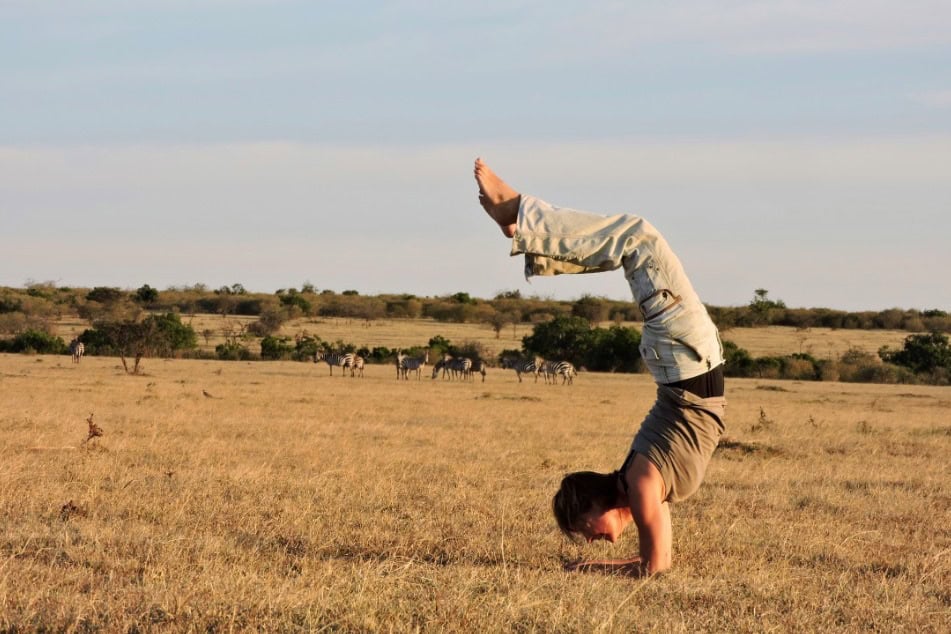
Safari and Spa in the Masai Mara
There’s a particular dust that gets into your clothes, your hair, and the creases of your hands after a full day in the vehicle, bumping along tracks toward wherever the guide thinks the pride has settled. Sunrise lights the stripes of a zebra grazing near an acacia, and with luck you watch a lion stalk through the grass toward something it hasn’t noticed you noticing. By the time you’re back at camp, your legs ache from bracing against every rut.
That’s the moment a spa session earns its place. A massage overlooking the savannah resets a body that has spent the day braced against bumps and heat. The soundtrack shifts from birdsong, wind in the grass, and maybe a distant lion to something quieter: soft music, the smell of the oils, a room where your shoulders finally drop.
Safari mornings are cool, midday heat is dry and direct, and evenings cool off again. Book the spa slot for late afternoon, after the day’s heat has done its work on your energy.
If you’re traveling between July and October, expect company: these are the Great Migration months in the Mara, when river crossings draw the most vehicles. A guided walk or horseback ride on a private conservancy is the quieter alternative to the busiest crossing points.
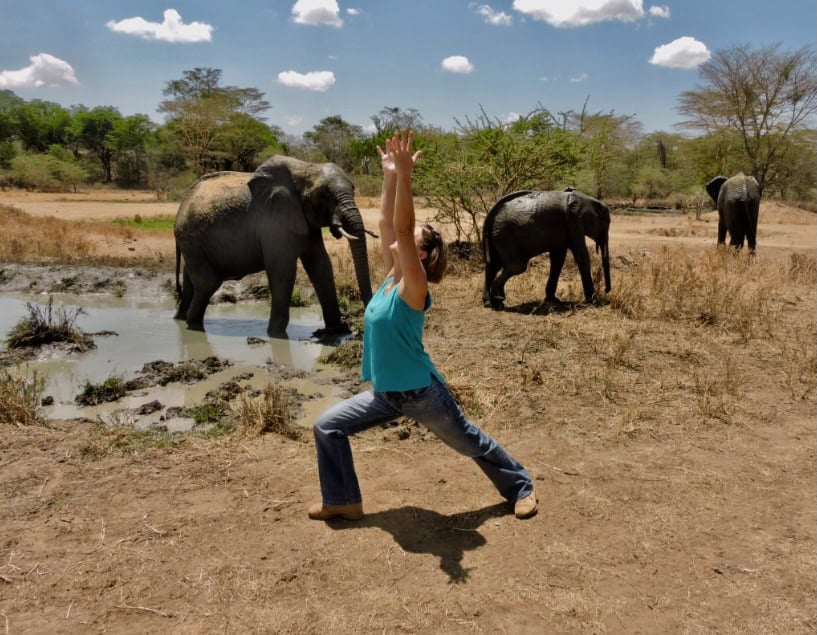
Mountain Hiking and Yoga on Mount Kenya
Mount Kenya’s lower slopes are forest, and they smell nothing like the plains: cool, damp, and green. Above the forest comes a belt of bamboo, then heath from about 3,000 m, then the Afro-alpine zone of giant lobelias and groundsels found almost nowhere else. You climb to birdsong and the creak of wind in the trees.
How cold it gets depends on how high you go. Point Lenana, the highest summit you can reach without technical climbing, sits at 4,985 m, and above the lower alpine zone there’s frost every night. Most guests on a wellness trip stay much lower, hiking day trails from a lodge or cottage on the forested slopes. Sleeping by an open fire after a day like that is its own therapy.
The wellness element changes the next morning. You wake to the slopes around you, unroll a mat, and an instructor leads a yoga flow before breakfast. A breeze comes off the mountain, the birds are already busy, and breakfast is waiting when you’re done. It’s a slower start than most travelers build into a hiking day, and it changes how the rest of the day feels.
Altitude matters more here than anywhere else on the trip. Pack layers for cold, wet, or freezing conditions depending on your route, not just a fleece for the evening.
Meditation and Dolphins on the South Coast
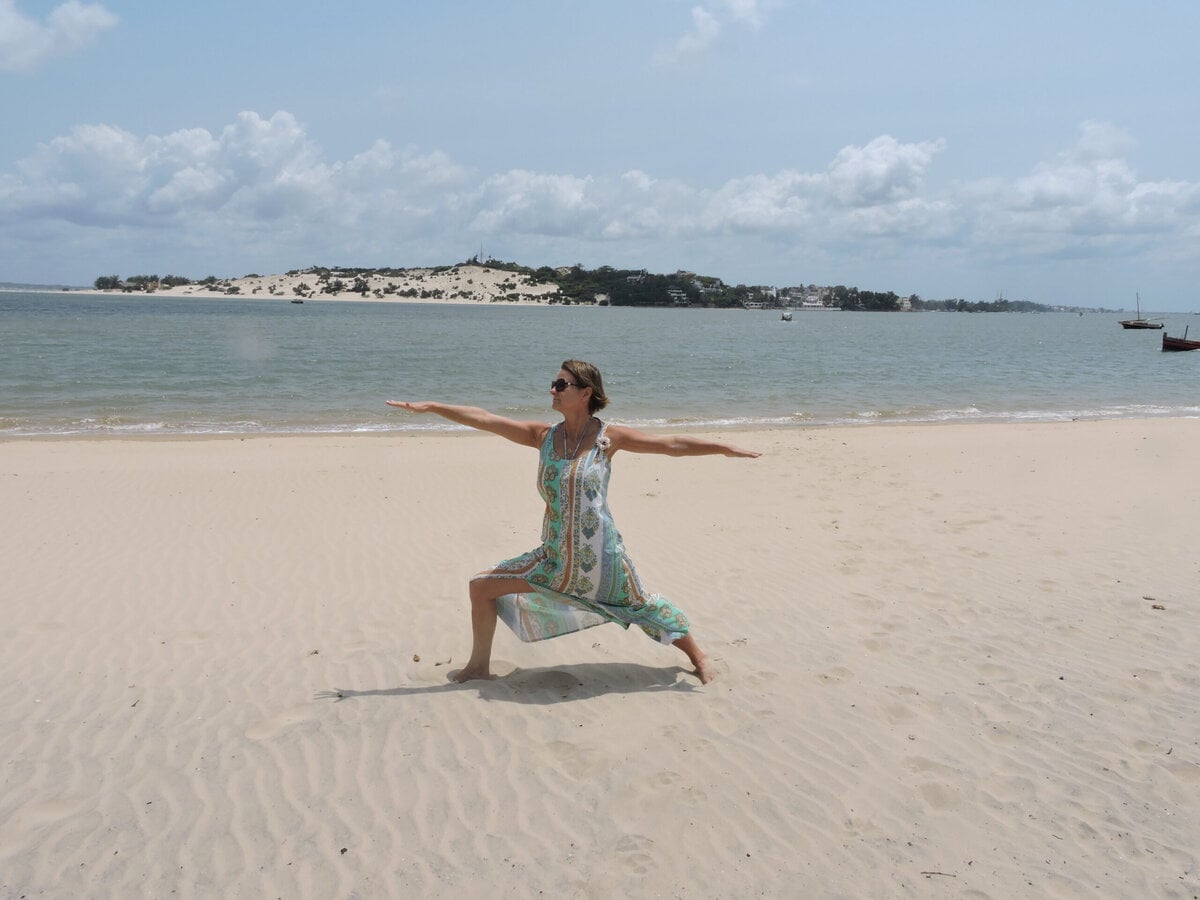
The coast runs on a different clock. Dawn meditation on an east-facing beach means sitting still as the sky turns red and the light spreads across the Indian Ocean, slowing your breathing until your mind quiets, before the day’s heat and humidity take hold. It’s the stillest of the three settings, and for many travelers it’s the one that does the most restorative work.
Later, a dhow takes you out from Shimoni toward Kisite-Mpunguti Marine Park, a protected area of about 39 km² off Wasini Island, sail flapping, waves knocking against the hull. Dolphins are often seen on the way out, sometimes close enough to the boat that they seem to be checking you out as much as you’re watching them. Then you slide into warm water to snorkel the reef, where green sea turtles are a common sight. Salt in the air, the splash as you go in: it’s a full swing from meditation to adrenaline in a few hours, and that contrast is the point.
Expect an early start if you’re based in Diani. Day trips typically collect guests between 6:00 and 7:30 AM to reach the Shimoni jetty by 8:30 AM.
Putting the Three Together
You don’t need to force all three into one trip if the logistics don’t allow it. With 10 days to two weeks, though, it’s realistic to move between plains, mountain, and coast without the trip feeling rushed. A route that works:
- Safari first (3–4 nights). Get the adrenaline and the dust into your system while your energy is highest.
- Mountain in the middle (3–4 nights). A physical reset in cooler air, with yoga to balance the hiking.
- Coast last (4–5 nights). The pace slows naturally before you fly home.
Build in a buffer day where you can, especially between the mountain and the coast, since the change in altitude and humidity is large.
Practical Information
Best Time to Go
The Masai Mara is busiest and most dramatic between July and October during the Great Migration, but wildlife viewing is strong year-round. Mount Kenya’s drier months — January to February and August to September — give the clearest summit views and the most stable hiking conditions. The south coast is warmest and driest from June to October, which conveniently overlaps with the Mara’s peak season, making a combined safari-and-beach trip work well in that window.
Managing the Three Climates
Each region on this route operates in a different climate zone. The Mara is warm and dry with cool evenings. Mount Kenya’s forested slopes are cool and often wet, and the upper trails can be cold enough for frost overnight. The south coast is hot and humid for most of the year. Moving from the mountain directly to the beach means a significant shift in both altitude and temperature, which is one reason a buffer day between those two legs is worth building in.
What to Bring
- Lightweight, neutral-colored clothing for game drives
- A warm mid-layer and waterproof jacket for Mount Kenya
- Thermal base layers if you plan to hike above 3,500 m
- Comfortable yoga or workout clothes
- A swimsuit and reef-safe sunscreen for the coast
- Good walking sandals and broken-in hiking boots
- A dry bag or waterproof case for the dhow excursion
Getting Between Regions
Nairobi is the hub for all three legs. Domestic flights connect Nairobi’s Wilson Airport to the Masai Mara airstrips in around 45 minutes. Mount Kenya is roughly 3.5 hours by road from Nairobi, making a self-drive or private transfer straightforward. Mombasa is served by daily flights from Nairobi (around one hour) or by the SGR express train, which takes roughly four hours and is a comfortable and affordable option. From Mombasa, Diani Beach on the south coast is a short ferry crossing and taxi ride away.
Frequently Asked Questions
How many days do you need for a Kenya safari and beach holiday?
Ten to fourteen days gives you enough time to cover the Masai Mara, Mount Kenya, and the south coast without feeling rushed. A tight ten-day version is possible if you use domestic flights rather than road transfers between regions.
Do I need yoga or meditation experience to join these sessions?
No. The sessions offered at lodges and wellness camps along this route are designed for all levels, including complete beginners. Instructors adapt sessions to the group, so you don’t need any prior experience to participate.
Can you swim with dolphins in Kenya?
Yes. Kisite-Mpunguti Marine Park off Wasini Island on the south coast is one of the most reliable spots in East Africa for dolphin encounters. Spinner and bottlenose dolphins are commonly seen, and snorkeling in the marine park also offers the chance to see green sea turtles and reef fish.
Do I have to climb Point Lenana to include Mount Kenya?
No. Point Lenana at 4,985 m is the highest non-technical summit on the mountain, but there are excellent day hikes and multi-day trails at much lower elevations on the forested slopes. Most wellness-focused itineraries stay between 2,000 m and 3,500 m, where the hiking is rewarding without requiring altitude acclimatization.
Do I need a visa for Kenya?
Most nationalities require a visa to enter Kenya. The East Africa Tourist Visa covers Kenya, Uganda, and Rwanda and can be applied for online before departure. Check current requirements with the Kenya Department of Immigration before you travel, as policies are subject to change.
Will the weather disrupt outdoor yoga or meditation?
It can, particularly on Mount Kenya where afternoon rain is common. Most lodges and wellness camps have covered outdoor spaces or indoor studios as a backup. On the coast, dawn meditation before the heat builds is the most reliable slot weather-wise. In the Mara, the dry season months from July to October offer the most consistent morning conditions for outdoor sessions.
Each of the three settings on this route — the open plains, the mountain forest, and the Indian Ocean coast — offers something distinct, and the wellness layer ties them together into a trip that is genuinely restorative rather than simply packed with activity.