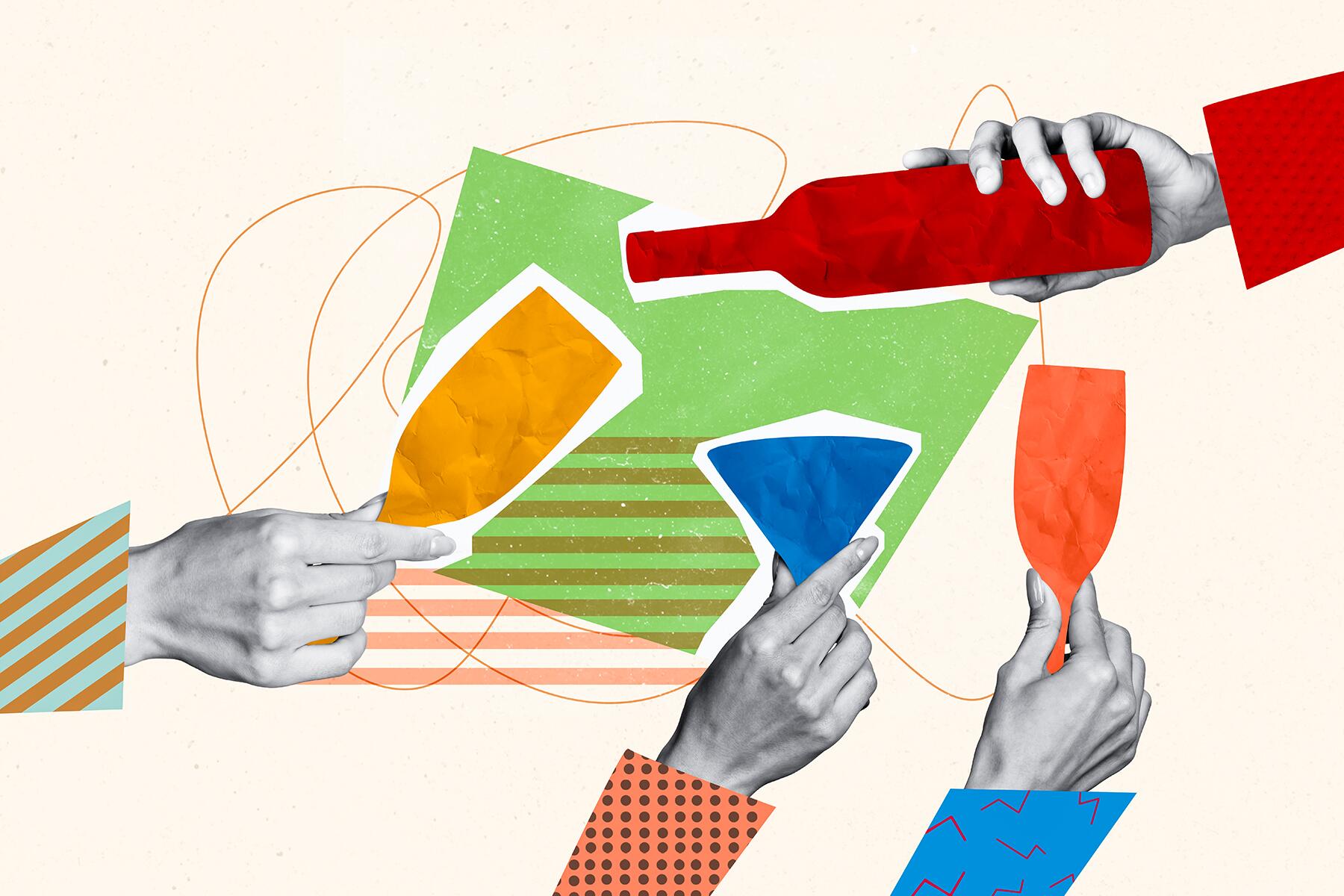

Experiencing a perfectly crafted cocktail in an elevated atmosphere should come with a little consideration.
Nothing is so refreshing as a hard-earned, ice-cold cocktail at the end of a long day. As a traveler who has taken every type of vacation—from lounging on a beach to exploring 12th-century castles—in addition to sipping on the best boozy beverages at home, I’ve learned there are rules to partaking in cocktail culture that supersede any zip code. That is to say, I’ve heard bartenders say “I see you” to an impatient patron in more accents than I can count.
Cocktail bars are experiencing a boom: what better way to learn a locale than to taste it in a sexy glass? Yet cocktail bar etiquette, unlike the unspoken codes that surround fine dining, for example, still flies under the radar. To be fair, paying for a singular drink that can cost as much as $40 (yes, I’ve ordered them and I have the credit card bill to prove it) entitles a customer to a little flexibility. But as a frequenter of fancy spirits houses who expects a drink worthy of the price point to land on my napkin, I’ve observed there’s certainly room for improvement on the other side of the bar.
Rob Crowe, bartender and council member at New York’s beloved Bar Snack—recently named the third-best bar in North America—said that helping newbies navigate the beverage world is a “good challenge” for hospitality professionals. After all, the best bartenders know that true service requires treating guests well regardless of their affinity for performing pet peeves. Still, I couldn’t help but ask Rob and more of North America’s 50 Best bartenders to point out some of the not-so-favorite habits they’ve witnessed when tending the well.
Get the Bartender’s Attention With Eye Contact
It may be true that patiently using eye contact is polite in any bar, but shaking specialty drinks takes an extra layer of concentration compared to the average pour. Flagging down a bartender by shouting “excuse me” or waving a credit card to pay isn’t the appropriate way to grab the attention of a busy artisan at work. Especially given they have likely already gotten wind that you’re waiting and added you to their mental queue before you started anxiously tapping your foot on the barstool.
Simply exchanging a moment of eye contact, or a subtle nod, with your nearest bartender will let them know you’re ready for whatever’s next. If you’re looking to speed up the lapse between check-ins, you can mention to your bartender in advance what your next move will be, as in teasing plans for a food order or requesting the check as they drop your last drink.
Don’t Ask for the Cheapest Drink on the Menu
The benefit of choosing a cocktail bar over the humble charm of a dive is that everyone’s equally investing in the exchange—with time, expertise, and yes, cold hard cash. That’s why Crowe says “someone asking what your cheapest drink on the menu is” can be “a bit of a red flag.” Not only does reducing a menu down to the cheapest option reject the elegance of the experience, but it can appear atypically tactless to a server, potentially hinting at more unfavorable behavior to come.
It’s not that hospitality pros are ignoring the fact that spending disposable income at their bar is a luxury for most. Crowe, whose bar is located in Manhattan’s East Village, notes, “I understand New York can be very expensive.” Still, the expert also suggests, “if you’re out to have a good time, you shouldn’t be worried about spending a buck or two [more]” instead of leaning into dining out.
Touching the Bartender’s Tools Is a Major No-No
The bar is a sacred place for the art of making drinks—and one that must stay hygienic considering it’s a surface for preparing items for public consumption. “If I’m behind the bar and I’m building cocktails, please don’t touch my tins or tools,” Ashtyn Harris, one of the lead bartenders at Press Club (a record lover’s dream venue in Washington, D.C.), shares. These tools are any and everything on the counter that isn’t your glass or place setting, including shakers, stirrers, ice, garnishes like toothpicks, citrus, and olives, and even piles of napkins and straws that aren’t explicitly put out in a self-service area.
Though nudging a tool or taking a toothpick may seem like a minor action that ultimately saves everyone time or space, keeping your hands from behind the invisible curtain is a matter of respect for the bartender’s authority as well as a health concern. “I don’t go to anyone’s office desk and start touching their pens, or click-clacking on the keyboard,” Ashtyn correlates. “Because that is my desk.”